
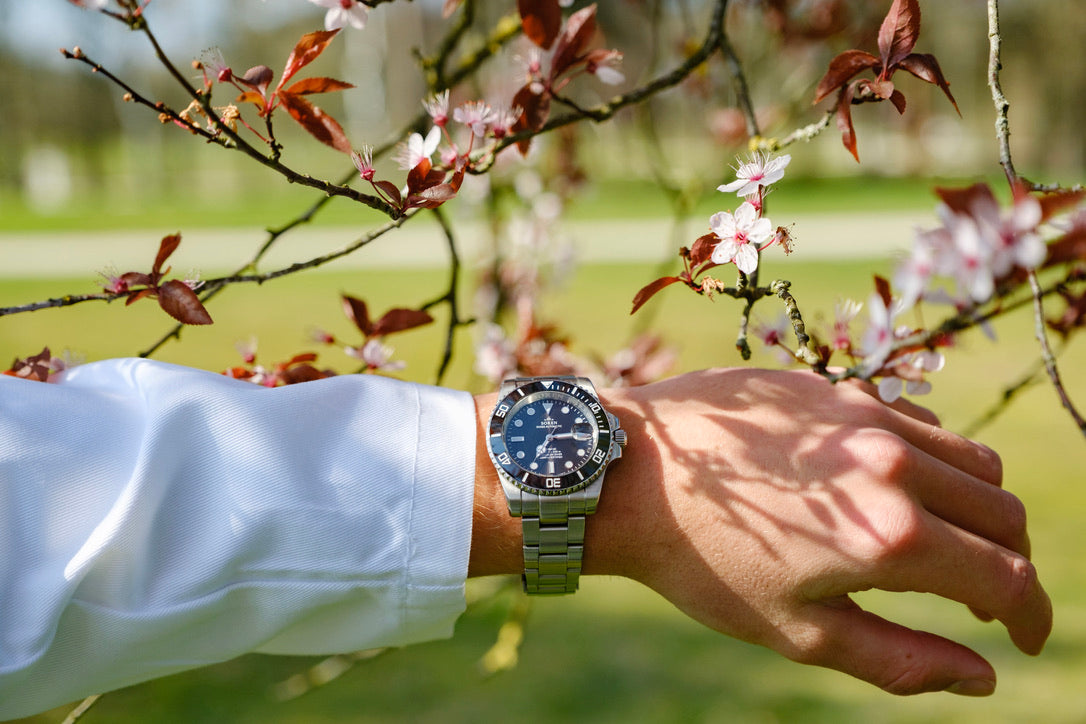
Buying your first automatic watch is different from buying any other watch. It is a decision that involves mechanical engineering, material science, personal style, and — if you buy right — a commitment to something that will outlast any smartphone, laptop, or piece of technology you own.
This guide is written to give you an honest answer to every question a first-time buyer needs answered. No brand allegiances, no unnecessary jargon. By the end, you will know exactly what to look for, what to ignore, and what your budget actually buys at each price point.
Why Choose an Automatic Watch?
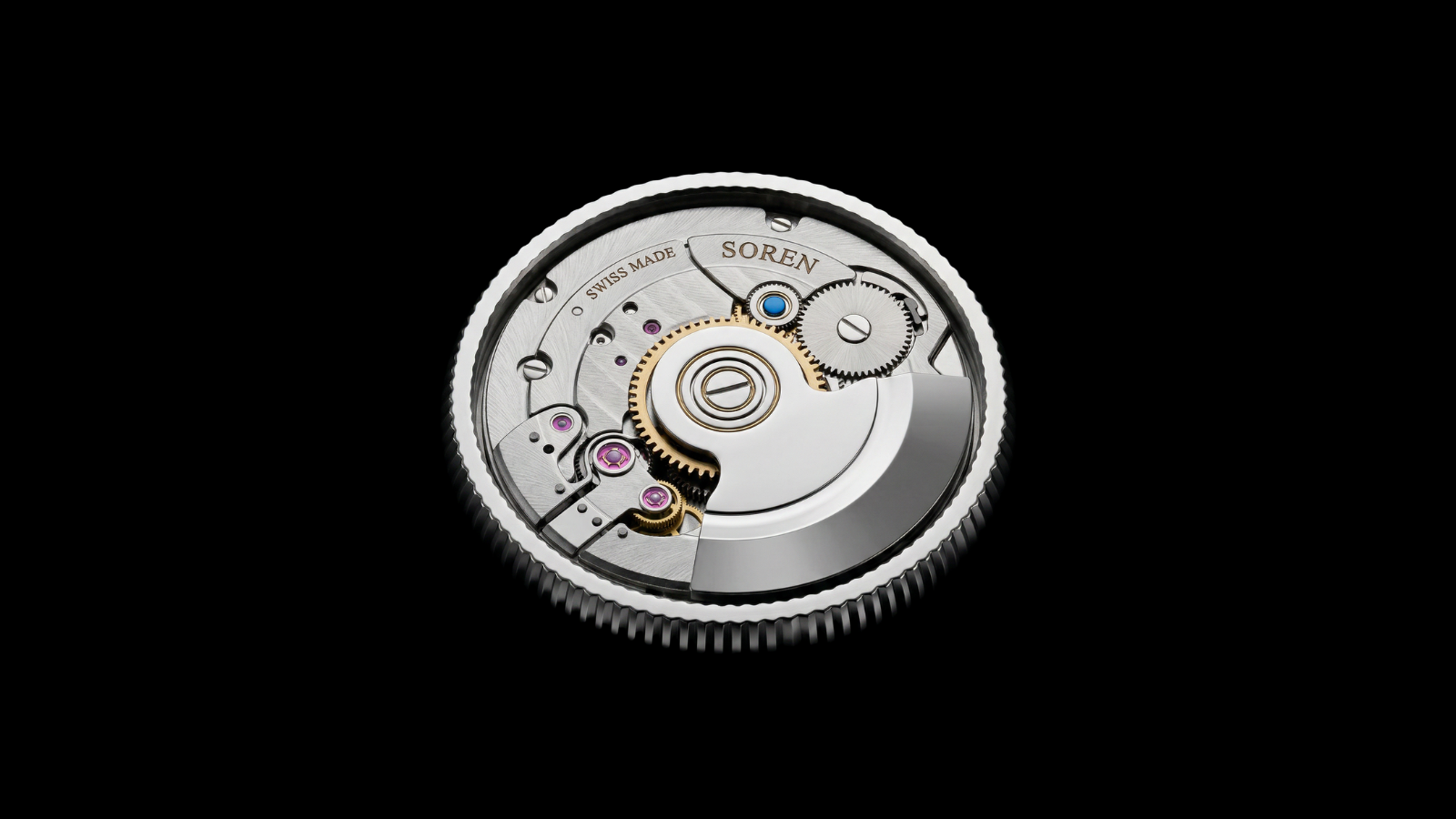
An automatic watch runs without a battery. Inside the movement, a semicircular weighted rotor swings with the natural motion of your wrist, winding a mainspring that stores mechanical energy. That energy is released in precisely metered increments through an escapement — a mechanism refined over three centuries of watchmaking — that drives the hands.
You never change a battery. You never plug it in. Worn regularly, a well-made automatic watch runs indefinitely.
The honest appeal is this: a quality automatic watch is a sophisticated mechanical object. Through a display case back, you can watch the movement oscillating at 28,800 vibrations per hour. There is no chip, no circuit, no software. The same fundamental mechanism that powered pocket watches in the 18th century powers the Soren Oceanic and Soren Momentis today.
But automatic watches are also less accurate than quartz — which can drift less than a second per year — and they require service every five to seven years. These are real tradeoffs worth understanding before you buy.
The Specs That Actually Matter
Water resistance — the most misunderstood specification
Water resistance is rated in ATM (atmospheres) or metres. For a first watch, the minimum for everyday use is 10 ATM (100 metres). This allows swimming, showering, and accidental submersion without concern.
30 ATM (300 metres) is professional dive watch specification — required for active water sports and recreational diving. The Soren Oceanic is rated to 30 ATM with a ceramic bezel and screw-down crown.
A critical warning: "water resistant 30 metres" printed on a budget fashion watch is not the same as 3 ATM. That designation typically means the watch passed a static laboratory test and should not be submerged at all. Always look for ATM rather than metres when evaluating water resistance.
Crystal type — sapphire vs mineral vs acrylic
The crystal is the glass over the dial. There are three types:
- Sapphire — rated 9 on the Mohs hardness scale. Scratch-resistant to virtually everything in daily life. The correct choice for any serious watch at €400+
- Mineral glass — scratches from keys, belt buckles, and hard surfaces. Common on watches under €300
- Acrylic (plastic) — scratches from almost anything but can be polished. Found on vintage pieces and budget watches
Both Soren collections use sapphire crystal as standard. At €625 and above, there is no reason to accept mineral glass.
Case material
316L stainless steel is the industry standard for quality watchmaking — corrosion-resistant, hypoallergenic, and durable over decades. Both Soren collections use 316L stainless steel throughout the case and bracelet.
Movement calibre — the most important decision
The movement is the engine of the watch. For a first automatic, three credible options exist at sub-€800:
- Sellita SW200 / SW200-1 — Swiss Made, 28,800 vph, -4/+6 seconds per day. The movement in both Soren collections
- Miyota 9015 — Japanese, 28,800 vph, -10/+30 seconds per day, 42-hour power reserve
- Seiko NH35 — Japanese, 21,600 vph, -20/+40 seconds per day. The right choice at €150–350
For a full comparison of these three movements — specifications, servicing costs, and real-world accuracy — read our Swiss Made Watch vs Japanese Automatic guide.
What to avoid: any movement listed as "automatic calibre" without a name or specification. Any movement described as "Swiss parts" or "Swiss inspired" — these are not Swiss Made. The Swiss Made designation is legally protected under Swiss federal law and cannot be used without meeting strict certification requirements. For a detailed explanation of what the label means, read our Complete Guide to Swiss Made Watches Under €700.
The Specs That Don't Matter as Much as You Think
Brand prestige
At sub-€1,000, you are often paying for a name, not better components. The movement inside a Tissot T-Sport and the movement inside a Soren Momentis are both Swiss Made Sellita calibres. The Tissot costs €800 through an authorised dealer. The Momentis costs €625 direct. The difference is distribution margin, not specification.
Limited edition status
Usually a marketing mechanism, not a quality indicator. Limit runs are designed to create urgency, not to deliver better components.
Polished vs brushed finishing
Personal preference entirely. Neither is objectively superior; brushed surfaces hide scratches better while polished surfaces show them more readily.
Understanding the Movement: What Happens Inside
When you wear an automatic watch, here is the sequence of events:
- Your wrist moves. The rotor — a semicircular weighted component — swings with inertia
- The rotor winds the mainspring through a series of reduction gears
- The mainspring stores energy as it coils
- That energy is released through the escapement — a lever and escape wheel that meters energy in precisely timed increments
- Each increment advances the gear train, which advances the hands
At 28,800 vph — the frequency of the Sellita SW200 — the escapement releases energy 8 times per second. This produces the smooth sweep of the seconds hand that distinguishes quality automatic movements from lower-frequency calibres that tick in visible steps.
If a watch has been unworn for more than 38–42 hours (the power reserve of the SW200), the mainspring will be fully unwound and the watch will stop. To restart it, wind the crown manually 20–30 times clockwise, then set the time. After a day of wear, it will stay running automatically.
For a full technical breakdown of the SW200 — including its history, accuracy in real-world conditions, and service requirements — read our Sellita SW200 Movement Guide.
Case Size: How to Get It Right
Case size is the most common source of buyer regret. A 44mm watch on a 16cm wrist looks and feels wrong — and most online buyers do not realise this until the watch arrives.
Recommended sizes by wrist circumference:
| Wrist circumference | Recommended case diameter |
|---|---|
| Under 16cm | 34–36mm |
| 16–17cm | 36–38mm |
| 17–18.5cm | 38–40mm |
| Over 18.5cm | 40–44mm |
The Soren Oceanic and Soren Momentis are both 40mm — the near-universal sweet spot that works across the widest range of wrist sizes and contexts.
Case height matters as much as diameter. A thinner watch — under 12mm — wears more comfortably under a shirt cuff and reads as more versatile across formal and casual contexts.
How to measure your wrist: Wrap a flexible measuring tape or a strip of paper around your wrist just above the wrist bone. Note the circumference in centimetres. This is the measurement to use when checking the sizing table above.
Bracelet vs Strap: Which Should You Choose?
The bracelet or strap is what you feel most of the time — more than the case or dial. Getting this right matters.
3-link bracelet (three-link stainless steel) Robust, adjustable, appropriate across casual and professional contexts. The default choice for a first watch. The Soren 3-link bracelet uses solid end links — not hollow, which can rattle and wear faster.
5-link bracelet (five-link stainless steel) More flexible on the wrist, slightly more formal. Associated with dress-watch contexts. Available on both Soren collections at a €30 premium.
Leather strap The most versatile option for formal wear, but wears out with daily use — expect three to five years before replacement. Not water-resistant — unsuitable for swimming.
NATO strap (nylon) Passes under the spring bars for security, available in many colours, easy and inexpensive to replace. Casual by nature — not appropriate for formal contexts.
All Soren watches use a 20mm lug width — the most widely available standard. Changing to a third-party strap takes two minutes with a spring bar tool and costs €15–50.
Budget Ranges: What You Actually Get
| Budget | What you get | Examples |
|---|---|---|
| Under €300 | Quartz or NH35, mineral glass | Seiko 5, Orient Bambino |
| €300–600 | NH35 or Miyota 9015, sometimes sapphire | Seiko Presage, Orient Star |
| €600–800 | Swiss Made + SW200 + sapphire + 10–30 ATM | Soren Momentis €625, Soren Oceanic €695 |
| Over €1,000 | Bigger brand name, comparable specs | Tissot PRX Powermatic 80 |
The €600–800 bracket represents the peak of the value curve for Swiss Made automatics bought direct. At this price, with a direct-to-consumer brand like Soren, you get Swiss Made certification, a Sellita SW200 movement, sapphire crystal, and serious water resistance — specifications that cost €1,200–1,500 if you add a well-known brand name and a retail dealer margin.
For context on how Soren compares to other independent Swiss Made options, read our 7 Independent Swiss Watch Brands Worth Knowing in 2026.
Buying in the Netherlands: What to Know
For Dutch buyers, a few practical considerations apply specifically.
Shipping and VAT Soren ships from the Netherlands. All prices include 21% Dutch VAT. There are no import duties, customs fees, or additional charges for EU buyers. Orders placed before 12:00 CET ship the same day.
Servicing The Sellita SW200 is one of the most commonly serviced movements in European watchmaking. Any certified watchmaker in Amsterdam, Rotterdam, Utrecht, Eindhoven, or Den Haag can service it. You will not need to send your watch overseas for routine maintenance.
Returns EU law requires a minimum 14-day return window. Soren offers 30 days from delivery, no questions asked.
For a full guide to buying Swiss Made in the Netherlands — including a comparison of local and international options — read our Buying a Swiss Made Watch in the Netherlands guide.
Common Beginner Mistakes to Avoid
Buying on brand recognition alone Swiss Made does not automatically mean quality. "Swiss Parts" and "Swiss Movement" are not the same as Swiss Made. Check the movement name and specification before buying.
Confusing water resistance numbers "Water resistant 30 metres" on a fashion watch is a splash rating at best. Look for ATM — 10 ATM is the minimum for swimming.
Ordering a case size without measuring your wrist A 44mm watch on a 16cm wrist looks wrong and wears uncomfortably. Measure first.
Spending too much on a first watch Your tastes will change after six months of wearing an automatic. A first automatic at €600–700 is a sensible entry point. A first automatic at €2,000 is a high-risk experiment — you may discover you prefer a different style entirely.
Not checking the return policy A 30-day return window is the minimum acceptable for an online watch purchase. You cannot fully evaluate a watch until it is on your wrist.
A Watch as a Gift: Is an Automatic the Right Choice?
If you are buying for someone else rather than yourself, a Swiss Made automatic is one of the strongest gift choices at this price point. The Swiss Made label communicates quality to a non-enthusiast recipient in a way that "Japanese automatic" does not — even if the specifications are comparable.
For occasion-specific advice and gift ideas, read our Why a Swiss Made Watch is the Perfect Gift guide.
Frequently Asked Questions
Do I need to wind an automatic watch every day? No — during regular daily wear, the rotor winds the mainspring automatically. Only if the watch has been unworn for more than 38–42 hours will you need to wind it manually.
How accurate is an automatic watch? The Sellita SW200 is accurate to -4/+6 seconds per day — less than three minutes of drift per month. Quartz watches are more accurate but require battery replacement. For most wearers, the accuracy of an SW200 is entirely sufficient.
How often does an automatic watch need servicing? Sellita recommends service every five to seven years under normal conditions. A service involves disassembly, cleaning, lubrication, and regulation — costing approximately €150–250 in Europe.
Can I shower with an automatic watch? With 10 ATM water resistance, yes — showering is fine. With 30 ATM, swimming and water sports are also fine. Avoid extreme temperature changes (cold pool to hot shower) as thermal shock can stress seals over time.
What is the difference between the Oceanic and the Momentis? The Oceanic is a dive watch — 30 ATM, ceramic bezel, built for active use. The Momentis is an everyday automatic — 10 ATM, cleaner design, more versatile. Both use Swiss Made Sellita movements and sapphire crystal. For a detailed comparison, read our Oceanic review.
Our Recommendation for a First Automatic Watch
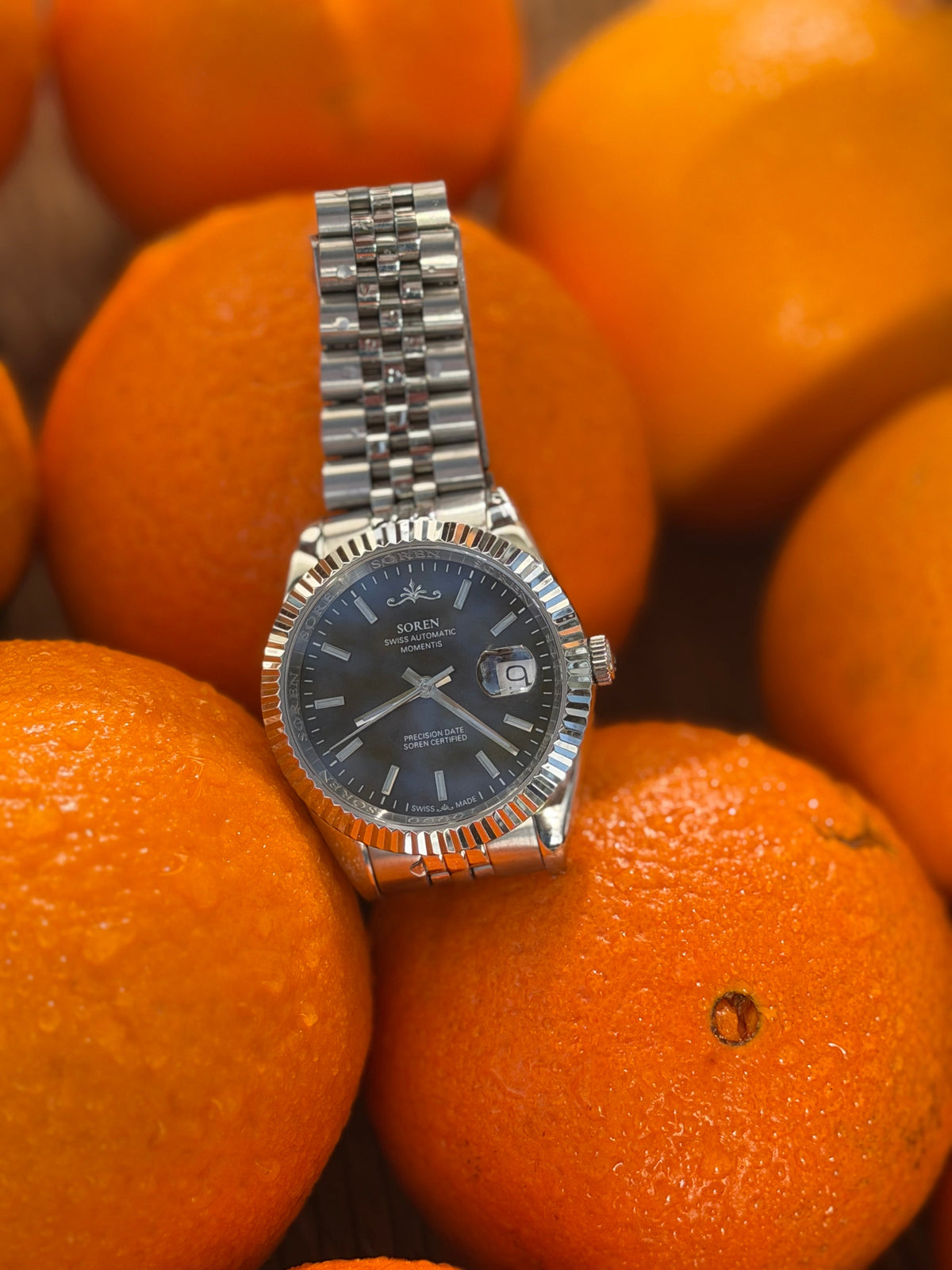
For a first Swiss Made automatic, the Soren Momentis is the straightforward answer at €625. It offers a Sellita SW200-1 movement, sapphire crystal, 316L stainless steel case, and 10 ATM water resistance — with a 40mm case that fits the widest range of wrist sizes.
If you swim regularly or want a watch built for outdoor use, the Soren Oceanic at €695 adds a ceramic bezel, 30 ATM water resistance, and the full SW200 movement. Professional dive specification at a non-dive price.
Both come with a 30-day return policy, two-year international warranty, free EU shipping, and same-day dispatch on orders before 12:00 CET.
Discover the Soren Momentis — Swiss Made automatic from €625 Shop the Momentis
Discover the Soren Oceanic — Swiss Made dive watch from €695 Shop the Oceanic


Leave a comment
This site is protected by hCaptcha and the hCaptcha Privacy Policy and Terms of Service apply.