
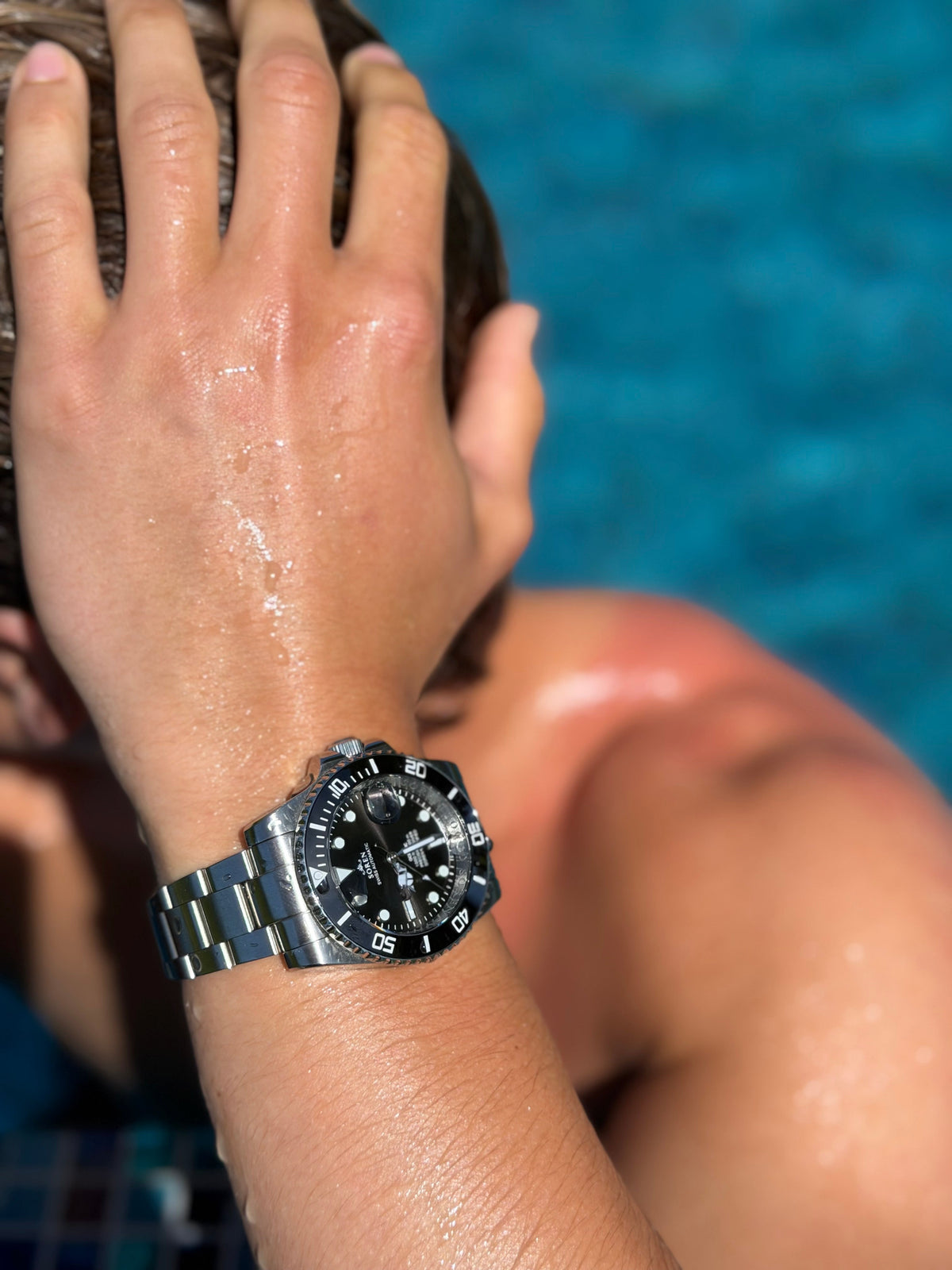
You've found the watch. Now comes the question nobody warns you about: 3-link or 5-link?
It sounds like a minor detail. It isn't. The bracelet you choose changes how the watch looks on your wrist, how it feels after eight hours of wear, and how it holds up over years of daily use. Both are excellent. Both suit different people. And with Soren's Oceanic and Momentis, you get to make that choice yourself.
This guide breaks down exactly what separates the two — so you can decide with confidence.
A Brief History of Both Bracelets
The 3-link bracelet came first. Introduced in the late 1930s, it was designed for one purpose: durability. Three broad, flat links. A solid, substantial feel. It became the standard for professional and sport watches because it could take a beating and look good doing it.
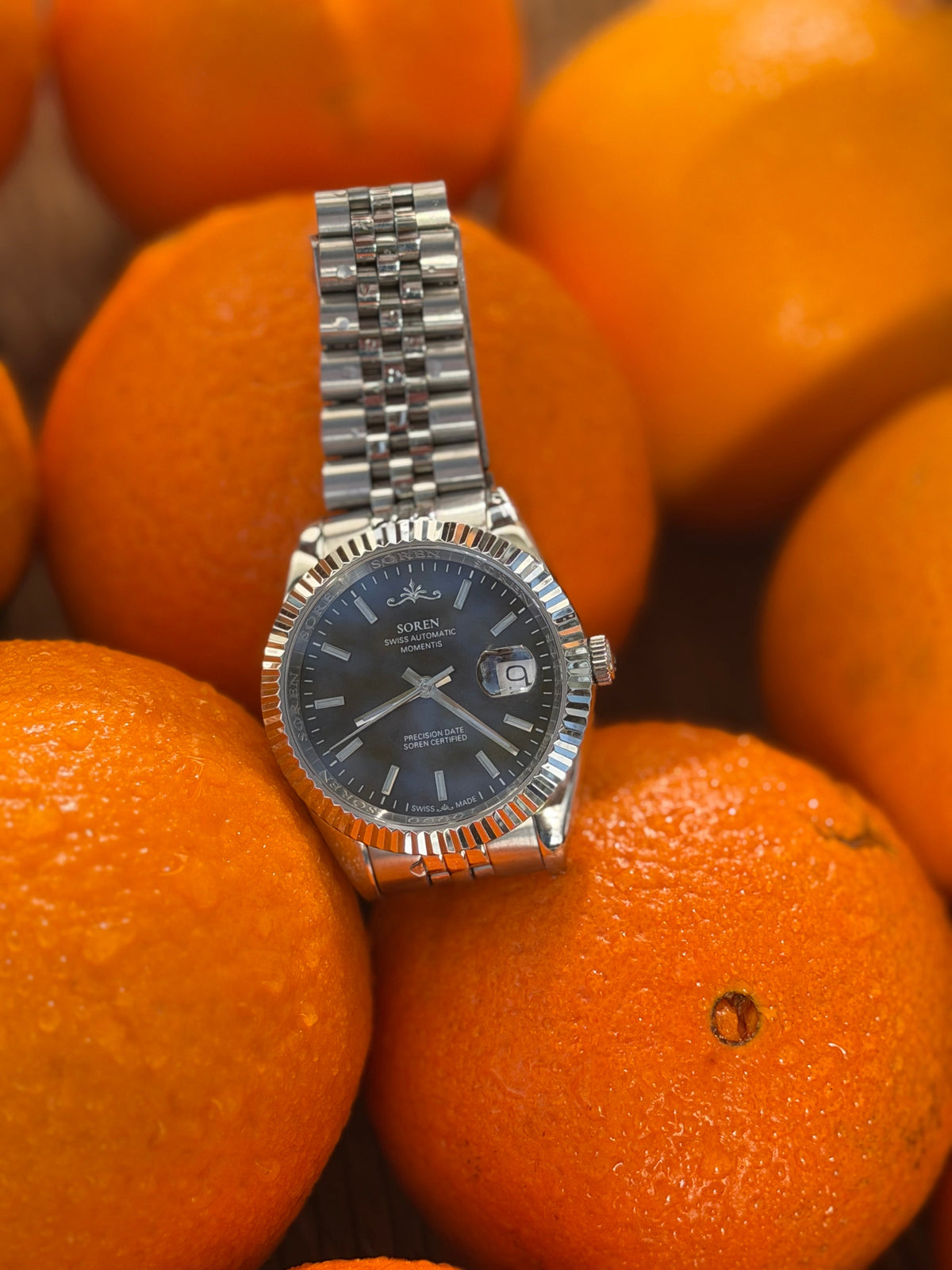
The 5-link arrived in 1945 as a more refined alternative. Five links instead of three, with smaller outer links flanking a wider centre link. The result is a bracelet that drapes more naturally on the wrist and catches light differently at every angle. It was designed to dress a watch up without making it feel precious.
Both have been refined over the decades. Both remain the two most copied bracelet designs in watchmaking history. And both are available on every Soren watch at no extra cost.
Design: Sport vs Dress
This is the most visible difference.
The 3-link reads as sporty. The three-link construction gives it a clean, bold appearance that pairs naturally with casual wear, outdoor settings, and anything that leans active. It has a toolwatch quality — purposeful, unfussy, ready for whatever the day brings.
The 5-link reads as refined. The five-link construction creates more visual movement, more reflection, and a slightly more jewellery-like quality. It pairs well with business attire, formal occasions, and situations where you want the watch to make a slightly quieter, more elegant statement.
Neither is more or less versatile than the other. What they are is different in character — and that character carries through to everything you wear the watch with.
On the Soren Momentis, both bracelets complement the fluted bezel and clean dial equally well. The 3-link gives it a crisper, more direct look. The 5-link softens it slightly and adds depth. On the Soren Oceanic, the 3-link reinforces the dive watch credentials. The 5-link turns it into something you could wear just as comfortably at dinner.
Comfort: How They Feel After a Full Day
Most people who have worn both bracelets for extended periods say the same thing: the 5-link is more comfortable.
The reason is flex. Five links articulate more freely than three. The 5-link wraps the wrist rather than sitting on top of it. On a warm day, or after hours of movement, that flexibility makes a noticeable difference.
The 3-link is not uncomfortable. Far from it. Its broader links distribute the weight of the watch differently, which some wearers prefer. It feels more planted, more present on the wrist. For some people that solidity is reassuring. For others it becomes fatiguing over long wear.
The honest answer is that both are excellent, and individual wrist shapes matter more than most guides acknowledge. A wider wrist often suits the 3-link. A narrower wrist often suits the 5-link. But there are plenty of exceptions in both directions.
If you wear the watch primarily during the day at work or in casual settings, you will likely not notice any difference after the first week of ownership. If you wear it through long active days, the 5-link's extra flex tends to win.
Durability: Which One Lasts Longer?
The 3-link has a practical edge here.
Fewer links means fewer points of articulation, and fewer points of articulation means less mechanical wear over time. The broader links also hide minor scratches more effectively than the smaller links of a 5-link. For a watch that will be worn daily through manual work, outdoor activities, or anything rough, the 3-link is the more resilient choice.
The 5-link is not fragile. On a well-made watch with quality steel — Soren uses 316L stainless for both bracelets — a 5-link will last decades of daily wear without issue. The smaller links are more susceptible to visible scratching, particularly on polished surfaces, but a combination of brushed and polished finishing (which both Soren bracelets use) mitigates this significantly.
Both bracelets on Soren watches are made from 316L stainless steel with a solid construction. There are no hollow links. The clasp is the same on both. From a build quality standpoint, the difference in durability between the two is small enough that it should not be a deciding factor unless your use case is genuinely extreme.
Which Bracelet Suits Which Watch?
A few practical patterns worth knowing:
Oceanic + 3-link is the classic dive watch combination. It reinforces the tool watch character of a 30 ATM, ceramic bezel dive watch. If the Oceanic appeals to you because of its water resistance and sport credentials, the 3-link bracelet deepens that identity.
Oceanic + 5-link is the more unexpected choice — and often the more striking one. A dive watch on a 5-link bracelet creates a contrast between the watch's functional purpose and its refined wrist presence. It is a combination that works particularly well with the blue and green dial variants.
Momentis + 5-link is the natural pairing for the Momentis's dressy character. The fluted bezel, clean dial, and 5-link bracelet create a cohesive look that works from weekday meetings to weekend occasions.
Momentis + 3-link is the choice for someone who wants the Momentis's elegance without the formality. It pulls the watch in a slightly more casual, everyday direction while keeping all of its refinement intact.
There is no wrong answer. These are tendencies, not rules.
The Soren Perspective
Both bracelets on Soren watches are designed and finished to the same standard. The choice is genuinely personal — which is why we offer it.
If you are buying your first automatic watch and unsure where to start, read our first automatic watch guide for a broader look at what to consider. If you want to understand the movement inside every Soren watch, the Sellita SW200 guide covers everything worth knowing.
For a closer look at each collection, the Oceanic review and Momentis review go into full detail on what each watch is built for and who it suits.
Summary: 3-link vs 5-link
| 3-link | 5-link | |
|---|---|---|
| Design | Sporty, bold | Refined, elegant |
| Comfort | Solid, planted | Flexible, draping |
| Durability | Slightly more resilient | Excellent with quality steel |
| Best for | Active wear, casual settings | Business, versatile daily wear |
| Pairs best with | Oceanic Black, Oceanic Blue | Momentis, Oceanic Green |
Frequently Asked Questions
Is the 5-link bracelet more comfortable than the 3-link? Most wearers find the 5-link more comfortable for extended wear due to its five-link construction, which articulates more freely and drapes the wrist more naturally. That said, comfort is personal and depends on your wrist shape and daily activity.
Which bracelet is more durable? The 3-link's three-link construction has fewer articulation points and tends to show less wear over time. Both are excellent when made from solid 316L stainless steel, as on Soren watches.
Can I switch bracelets after buying? Yes. Soren bracelets use a standard 20mm lug width. A watchmaker can swap the bracelet for you. If you want a different look later, it is a straightforward service.
Which bracelet is better for a dive watch? The 3-link is the traditional choice for dive watches and reinforces the sport character of a watch like the Oceanic. That said, an Oceanic on a 5-link is a popular combination for those who want a more versatile look.
What steel do Soren bracelets use? Both the 3-link and 5-link bracelets on Soren watches are made from 316L stainless steel with solid link construction. No hollow links.
The decision comes down to one question: what do you want the watch to say on your wrist?
Sport and purpose — choose 3-link. Refinement and versatility — choose 5-link. Both are right. Both are available on the Oceanic and the Momentis.



Leave a comment
This site is protected by hCaptcha and the hCaptcha Privacy Policy and Terms of Service apply.