
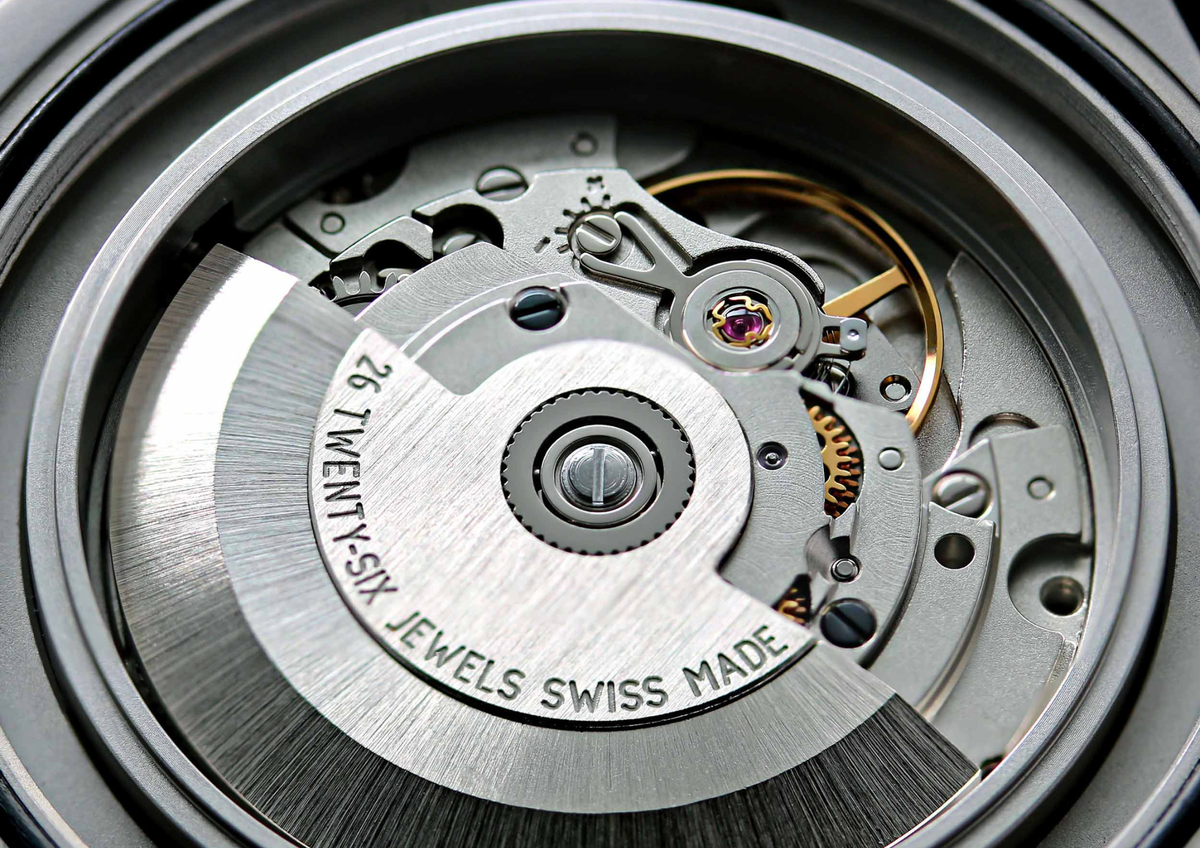
If you are considering a watch with a Sellita SW200 movement, one of the fair questions to ask is: how accurate is it, really? This guide answers that precisely. It breaks down the four accuracy grades Sellita offers, explains what each one means in daily wear, and tells you exactly which grade Soren uses. No vague reassurance, just the real numbers.
The Short Answer: ±4 to ±12 Seconds Per Day
A Sellita SW200 is accurate to somewhere between ±4 and ±12 seconds per day, depending on the grade of the movement. That range exists because Sellita produces the SW200 in four distinct accuracy grades, each regulated to a tighter tolerance than the last.
For context, this is entirely normal for a mechanical automatic watch. A mechanical movement is a tiny machine of springs and gears, and it will never match the precision of a quartz movement. What it offers instead is craftsmanship, longevity, and the fact that it never needs a battery. A few seconds of drift per day is the nature of mechanical watchmaking, not a flaw.
The Sellita SW200 is one of the most respected movements in this class, and its accuracy reflects that.
The Four Accuracy Grades
Sellita regulates the SW200 to four different standards. The grade determines how tightly the movement is adjusted at the factory, and it directly affects both accuracy and price.
Standard grade: ±12 seconds per day. The base grade. Regulated in a limited number of positions, it delivers accuracy suitable for everyday mechanical watches. This is the most common grade across the accessible watch market.
Special grade (also called Élaboré): ±7 seconds per day. A step up. The movement is regulated more carefully and in more positions, tightening the tolerance considerably. This grade offers a noticeably better accuracy without the cost of chronometer certification.
Premium grade (also called Top): ±4 seconds per day. A high grade, regulated to a tight tolerance that approaches chronometer territory. Used in watches where accuracy is a selling point.
Chronometer grade (COSC): -4/+6 seconds per day. The top grade, individually tested and certified by the COSC, the official Swiss chronometer testing body. Each movement is tested over 15 days in multiple positions and temperatures. This is the most accurate and most expensive grade, and it adds significant cost per movement.
The difference between the grades is not the design of the movement but how precisely each individual unit is regulated and tested at the factory.
What Grade Does Soren Use?
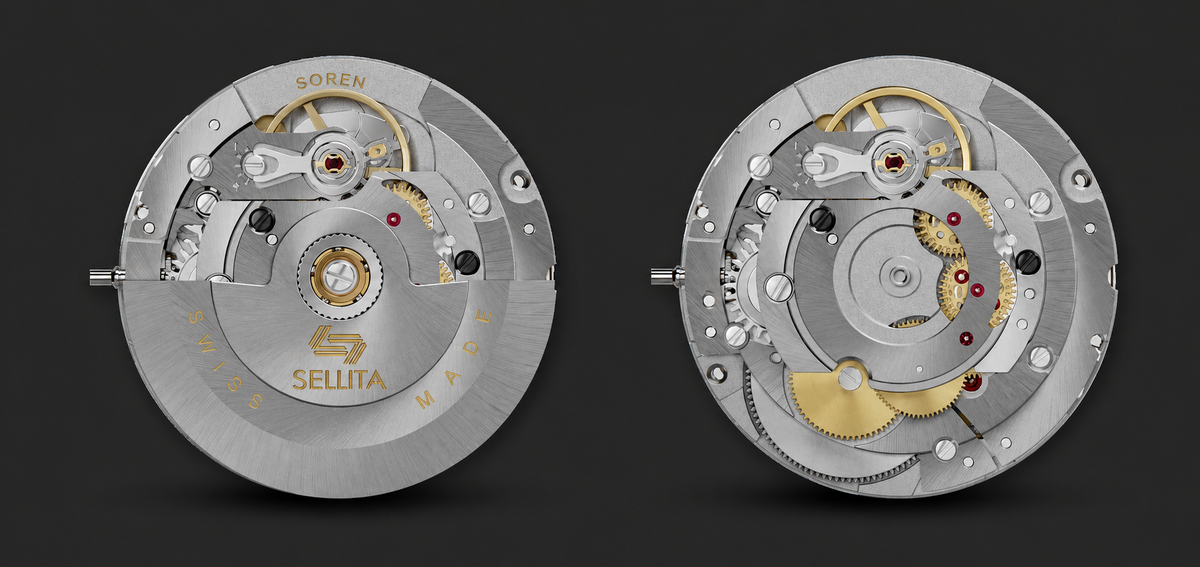
Soren uses the Special grade, regulated to ±7 seconds per day.
This is a deliberate choice. The Standard grade at ±12 would have been cheaper, but the Special grade delivers meaningfully better accuracy for daily wear without pushing the price into chronometer territory. It sits at the sweet spot: a genuinely accurate mechanical movement at a fair price.
In practice, ±7 seconds per day means the watch may drift by up to around seven seconds in either direction over a full day, though in real-world wear the actual figure is often better, because the movement averages out across the different positions your wrist takes through the day. Both the Momentis and the Oceanic use this Special grade SW200-1.
Being transparent about the grade matters. Some brands are vague about their movement accuracy precisely because they use the base grade and would rather not say so. Stating ±7 seconds per day, Special grade, is a claim you can hold Soren to.
SW200 vs Quartz and COSC
To understand what ±7 seconds per day means, it helps to compare it to the alternatives.
Versus quartz. A quartz watch is accurate to around ±15 seconds per month, which is far tighter than any mechanical movement. If absolute accuracy is your only priority, quartz wins, and no mechanical watch will ever compete. But quartz needs batteries, lacks the craftsmanship of a mechanical movement, and does not carry the same character or longevity. The choice between mechanical and quartz is a choice about what you value, not just about accuracy.
Versus COSC. A COSC-certified chronometer is accurate to -4/+6 seconds per day, tighter than the Special grade's ±7. The difference sounds significant on paper but is small in practice: a second or two per day. COSC certification also adds meaningful cost, which is passed on to the buyer. The Special grade delivers most of the accuracy benefit at a fraction of the cost premium, which is why it is a smart choice for a watch focused on value.
What Affects Accuracy Day to Day
Even within its grade, a mechanical watch's accuracy varies based on how it is worn and treated. Understanding this helps you get the best from the movement.
Position. A mechanical watch runs at slightly different rates depending on its orientation: dial up, crown down, and so on. This is why higher grades are regulated in more positions. Over a day of normal wear, these positional variations partly cancel out.
Wind level. A movement that is fully wound runs more consistently than one running low on power. Wearing the watch daily keeps it well wound and running at its best.
Temperature. Extreme heat or cold affects the rate slightly. Normal wrist temperature is where the movement is regulated to perform.
Magnetism. This is the big one. Exposure to magnets, from phone cases, laptops, speakers, and magnetic clasps, can magnetise the movement and cause it to run significantly fast, sometimes by a minute or more per day. If your watch suddenly loses accuracy, magnetism is the most likely cause, and it is easily and cheaply reversed by any watchmaker with a demagnetiser.
Service condition. As lubricants age, accuracy drifts. A watch that has gone many years without a service will run less accurately than a freshly serviced one. Regulating the movement is part of a standard service.
Is the SW200 Accurate Enough for Daily Wear?
For the overwhelming majority of people, yes, comfortably.
At ±7 seconds per day, the worst-case drift is about a minute per week. In practice it is usually less, and most owners simply correct the time when they notice it, or reset against a reference once a week. For a watch worn as a daily companion rather than a scientific instrument, this is more than accurate enough.
If you genuinely need to-the-second accuracy for professional reasons, you would use quartz or a phone. But as a watch to wear, enjoy, and rely on day to day, a Special grade SW200 keeps time you never have to think about. You reset it occasionally, and the rest of the time it simply works.
The accuracy is one part of why the SW200 has been the trusted workhorse of Swiss watchmaking for over fifteen years, and why Sellita's 2026 SW200-2 upgrade refined it further while keeping the same fundamental reliability.
FAQ
Is Sellita as accurate as ETA?
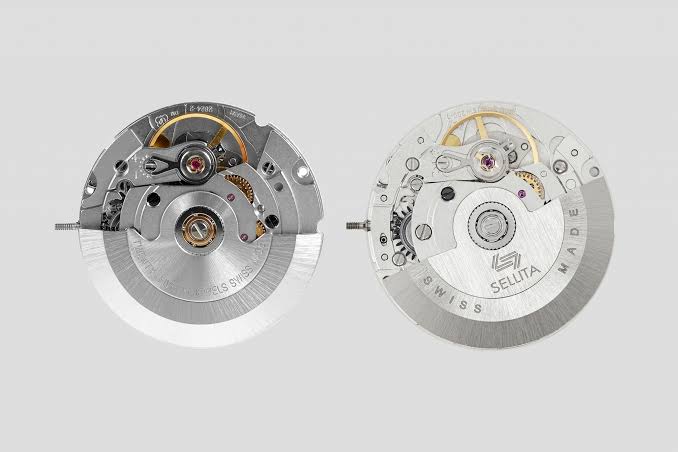
Yes. The Sellita SW200 and the ETA 2824-2 are near-identical movements offered in equivalent accuracy grades. A Special grade SW200 and an equivalent-grade ETA perform to the same tolerance. Sellita was engineered as a direct alternative to ETA and matches it in accuracy, reliability, and serviceability. Neither is meaningfully more accurate than the other at the same grade.
Can SW200 accuracy be adjusted or regulated?
Yes. A watchmaker can regulate the movement to improve its accuracy, adjusting the balance to bring the rate closer to zero deviation. This is a standard part of a service and can also be done on its own. If your watch is running consistently fast or slow, regulation can often bring it back within or even beyond its grade tolerance.
What is COSC certification?
COSC, the Contrôle Officiel Suisse des Chronomètres, is the official Swiss body that tests and certifies chronometers. A COSC-certified movement is individually tested over 15 days in five positions and three temperatures, and must perform to -4/+6 seconds per day to pass. It is the highest accuracy standard for a mechanical watch, and it is separate from Swiss Made certification, which covers origin rather than accuracy.
How accurate is the Soren SW200?
Soren uses the Special grade SW200-1, regulated to ±7 seconds per day. In real-world daily wear, the actual drift is often less, as positional variations average out. This is a genuinely accurate mechanical movement, a step above the base Standard grade, at a fair price.
Why is my mechanical watch less accurate than my phone?
Because a mechanical watch keeps time with a physical balance wheel and springs, while a phone syncs to atomic clocks over the network. A mechanical watch will always drift by a few seconds a day where a phone stays perfect. You are not buying a mechanical watch for absolute accuracy; you are buying it for craftsmanship, longevity, and the fact that it runs on motion rather than a battery.
Will accuracy get worse over time?
It can, as the movement's lubricants age and it approaches its service interval. A watch that has run many years without service will drift more than a freshly serviced one. Regular servicing, which includes regulation, restores the movement to its rated accuracy. Keeping the watch away from magnets also helps maintain accuracy day to day.
The Bottom Line
The Sellita SW200 is accurate to between ±4 and ±12 seconds per day depending on grade. Soren uses the Special grade, regulated to ±7 seconds per day, which is a genuinely accurate mechanical movement at a fair price, a clear step above the base grade without the cost of chronometer certification.
For daily wear, that accuracy is more than enough. You reset the watch occasionally and otherwise never think about it. Keep it away from magnets, wear it regularly, and have it serviced when due, and a Special grade SW200 will keep reliable time for decades.
That combination of accuracy, reliability, and longevity is exactly why the SW200 has earned its place as the trusted standard of Swiss watchmaking.
Free EU shipping. 2-year warranty. 30-day returns. Swiss Made. sorenwatches.com


Leave a comment
This site is protected by hCaptcha and the hCaptcha Privacy Policy and Terms of Service apply.