
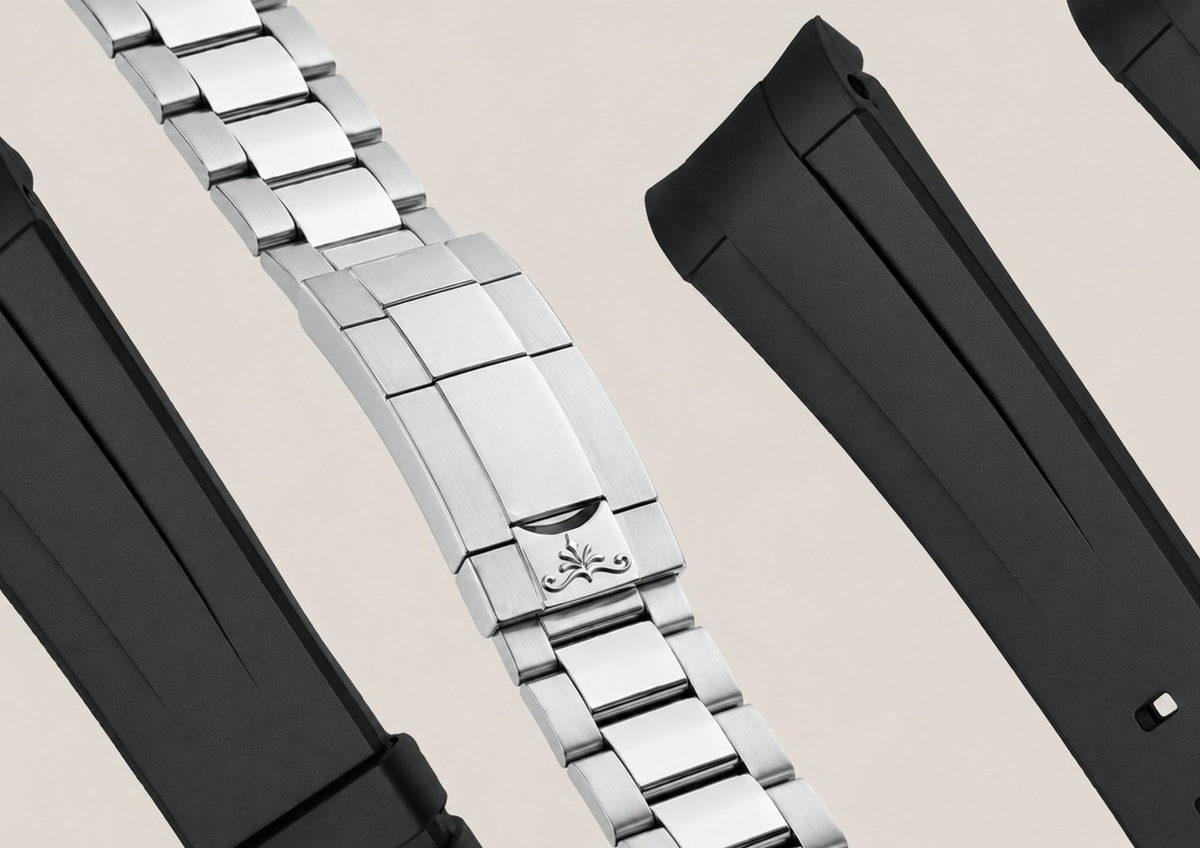
The strap is half the watch. It determines how the watch sits, how it feels across a long day, and how formal or casual it reads on the wrist. Two people can own the same watch and wear it in completely different ways depending on what it is attached to.
Most buyers spend weeks choosing a movement and a dial colour, then accept whatever bracelet the watch arrives on without much thought. That is a mistake. This guide covers the four bracelet and strap types you will actually encounter, what each one does well, what it does badly, and how to decide which belongs on your wrist.
The 3-link Bracelet
The 3-link is a three-link design: a wide centre link flanked by two narrower outer links. It was developed by Rolex in the 1930s and has since become the most widely used metal bracelet design in watchmaking.
What it does well. The 3-link is the most robust of the metal bracelet designs. Fewer links means fewer points of articulation, which means fewer places for wear to develop over years of use. It is also the easiest to clean, since there are fewer gaps for dirt and skin oils to collect. Visually it reads as purposeful and sporty. It is the bracelet that looks correct on a dive watch, a field watch, or anything with a tool-watch character.
What it does less well. The flat, broad links make the 3-link slightly less flexible than a multi-link bracelet. On smaller wrists, or on wrists with a pronounced taper, it can sit with a small gap rather than wrapping fully. It is also visually the plainer of the two metal options; if you want a bracelet that catches light and adds visual interest, the 3-link is not it.
Who it suits. Anyone who wants a bracelet that disappears into the background and lets the watch do the talking. Anyone with an active life who values durability over ornament. Anyone wearing a dive watch, where the sporty character is consistent with the watch's purpose.
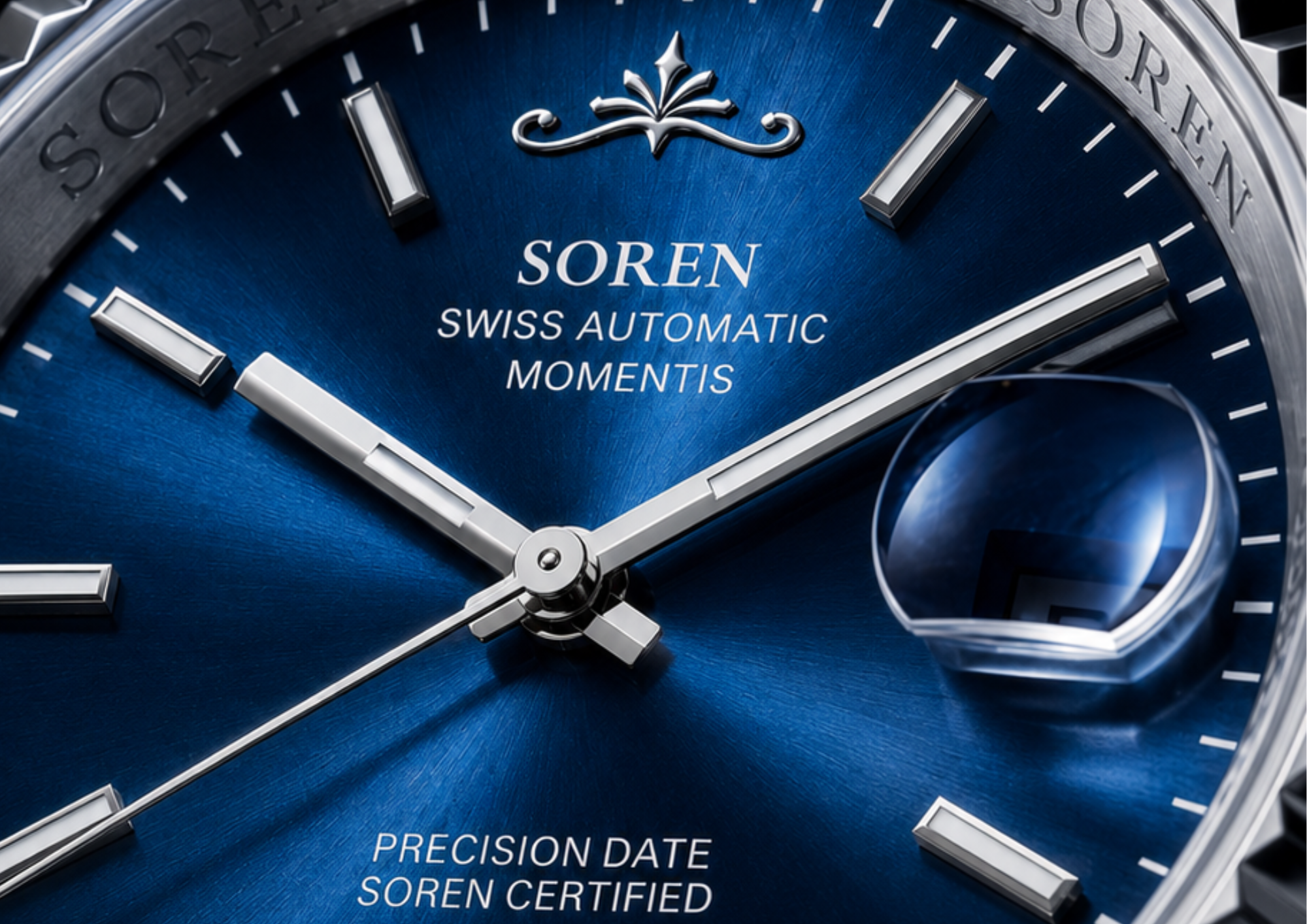
The SOREN Oceanic on the 3-link is the most straightforward expression of a dive watch: solid, purposeful, and honest. The Momentis on the 3-link reads as a clean daily tool watch.
The 5-link Bracelet
The 5-link is a five-link design, with three narrower centre links flanked by two outer links. Rolex introduced it in 1945 for the Datejust's launch, and it has been associated with dressier, more refined watches ever since.
What it does well. More links means more articulation, and more articulation means the bracelet wraps the wrist more closely. Many wearers find the 5-link noticeably more comfortable than the 3-link, particularly over long days. The smaller links also catch light differently across the surface, which gives the bracelet visual depth and makes the watch read as more refined. On a dressier watch, the 5-link is the more coherent choice.
What it does less well. More links means more moving parts and more surfaces where dirt collects. The 5-link requires slightly more attention to keep clean. Its finer construction also means it shows wear at the link joints sooner than an 3-link under heavy use. And on a genuinely rugged tool watch, some wearers find the 5-link refinement slightly at odds with the watch's character.
Who it suits. Anyone who prioritises comfort. Anyone who wears the watch across both professional and social settings and wants a bracelet that works in a boardroom as easily as at dinner. Anyone who wants the watch to have some visual presence.
For a detailed comparison of these two specifically, including how they wear and which suits which wrist, read the full 3-link vs 5-link bracelet guide.
The Rubber Strap
A rubber strap is exactly what it sounds like, though modern rubber straps are typically made from vulcanised rubber or FKM fluoroelastomer rather than the cheap material the name implies.
What it does well. Rubber is completely impervious to water, sweat, and chlorine. If you swim, dive, or exercise with your watch, rubber is the correct choice and metal is not. It is significantly lighter than a steel bracelet, which changes how the watch wears on hot days. It also transforms the character of the watch: a dive watch on rubber reads as sportier and more purposeful than the same watch on steel.
What it does less well. Rubber is less formal. On a dressier watch or in a formal setting, a rubber strap reads as a mismatch. Cheap rubber can also attract dust and lint, and lower-quality rubber degrades over time and develops a tacky surface. Good rubber does not do this, but the material quality varies significantly across the market.
Who it suits. Anyone who is genuinely active with their watch on. Anyone who spends time in or near water. Anyone who wants a second option that changes the watch's personality without buying a second watch.
SOREN offers a rubber strap in black, blue, and green at €35, designed to fit the Oceanic and Momentis. It uses a deployant clasp with the SOREN logo, which means the security of a metal bracelet clasp with the comfort and water resistance of rubber. For anyone who wants a summer option or a genuine swimming strap, this is the most cost-effective way to add a second character to a watch you already own.
The Leather Strap
Leather is the traditional watch strap material and remains the most formal option available.
What it does well. Nothing reads as dressy quite like leather. A watch on a well-made leather strap sits under a shirt cuff more comfortably than a metal bracelet, and it develops a patina over time that is genuinely attractive. Leather is also the lightest of the four options and the most comfortable in cold weather, since it does not conduct temperature the way steel does.
What it does less well. This is the honest part: leather and water do not mix. Sweat, rain, and hand-washing all degrade leather over time. A leather strap worn daily typically needs replacing every one to three years depending on the conditions. It also stretches and softens, which changes the fit over time. This is not a defect; it is the material.
Who it suits. Anyone whose watch is primarily worn in professional or formal settings. Anyone who wants the traditional look. Anyone who is willing to accept the replacement cycle in exchange for the comfort and character.
A note of honesty: for a dive watch rated to 30 ATM, a leather strap is a slightly contradictory choice. The watch is engineered for water; the strap is not. That said, plenty of people wear dive watches on leather and enjoy it. There is no rule.
What to Look For in Any Strap or Bracelet
Regardless of type, certain things separate a good strap from a bad one.
Material grade for metal bracelets. 316L stainless steel is the standard. Anything less is a compromise. Critically, ask whether the bracelet is solid 316L or a coated base metal. A coated bracelet looks identical in photographs and wears through within months. Both SOREN bracelets are solid 316L with no coating and no plating, on both the case and the bracelet.
Clasp quality. The clasp is where a bracelet fails first. Look for a solid, machined clasp rather than a stamped one. A stamped clasp feels light and hollow; a machined clasp feels dense. On a watch you intend to keep, this matters.
Micro-adjustment. Wrists change size over the day and with temperature. A bracelet with micro-adjustment holes in the clasp lets you fine-tune the fit without removing links. Without it, you are choosing between slightly too tight and slightly too loose.
Lug width match. A strap must match the lug width of your watch exactly. Both the Momentis and Oceanic use a 28mm lug width. A strap of the wrong width will either not fit or will sit with visible gaps.
Spring bar quality. The spring bars hold the strap to the watch. Cheap spring bars fail, and when they do, the watch falls off your wrist. This is one of the few genuine failure points on an otherwise robust watch. Quality spring bars are inexpensive and worth insisting on.
Building a Two-Strap Setup
The most practical approach for most owners is to own one watch and two straps. This effectively gives you two watches for a fraction of the cost.
The standard combination is a metal bracelet for daily and professional wear, plus a rubber strap for summer, water, and exercise. This covers essentially every context most people encounter. The watch stays the same; the character changes completely.
For an Oceanic owner, the 3-link or 5-link handles the office and the evening. The rubber strap handles the beach, the pool, and the gym. Two straps, one watch, every situation covered for an additional €35.
Changing between them takes about two minutes with a basic spring bar tool, which costs a few euros. It is the highest-return upgrade available to any watch owner.
FAQ
Which is more comfortable, 3-link or 5-link?
Most wearers find the 5-link more comfortable because its five-link construction articulates more freely and wraps the wrist more closely. The 3-links broader links make it slightly stiffer. That said, comfort is personal and depends on wrist shape. Some people prefer the more solid feel of an 3-link. Neither is objectively more comfortable for everyone.
Can I put a rubber strap on a dress watch?
You can, but it will read as a mismatch in most formal settings. Rubber is a sport material and communicates that clearly. If your watch is primarily worn in professional or formal contexts, a metal bracelet or leather strap is the more coherent choice. If your watch is a dive watch or sport watch, rubber is entirely appropriate.
How often should I replace a leather strap?
Between one and three years for a strap worn daily, depending on exposure to sweat and water. Leather degrades from moisture, and a daily-worn strap accumulates a lot of it. A strap worn occasionally can last considerably longer. Signs it is time to replace: cracking at the fold points, stretching that changes the fit, or a persistent odour that does not clean out.
Will a steel bracelet scratch?
Yes. All metal scratches. The advantage of solid 316L is that scratches can be polished out by a watchmaker, because the material is the same all the way through. A coated or plated bracelet cannot be restored this way; once the coating wears through, the base metal underneath is exposed permanently.
What lug width do SOREN watches use?
Both the Momentis and the Oceanic use a 28mm lug width. Any strap you buy must match this exactly. The SOREN rubber strap is made specifically for this fitment.
Is it worth buying a second strap?
For most owners, yes. A second strap costs a fraction of a second watch and changes the character of the watch almost as much. A rubber strap at €35 alongside a steel bracelet covers essentially every wearing context. It is the highest-value addition available to any watch owner.
Can I change the strap myself?
Yes. A basic spring bar tool costs a few euros and the process takes about two minutes once you have done it once. The main risk is scratching the lugs with the tool, which is avoided by working carefully and using a cloth as a barrier. If you are not confident, any watchmaker will do it in a few minutes.
The Bottom Line
There is no single best strap. There is only the right strap for the watch, the wearer, and the context.
The 3-link is robust, clean, and purposeful. The 5-link is more comfortable, more refined, and more visually interesting. Rubber is the correct answer for water and heat. Leather is the correct answer for formality, at the cost of a replacement cycle.
The most practical setup for most owners is a solid 316L steel bracelet for daily wear plus a rubber strap for everything wet or warm. Two straps, one watch, every context handled.
Whatever you choose, the things that matter are consistent: solid material rather than coated, a machined clasp rather than a stamped one, and quality spring bars. Those three things separate a strap that lasts from one that does not.
Free EU shipping. 2-year warranty. 30-day returns. Swiss Made. sorenwatches.com


Leave a comment
This site is protected by hCaptcha and the hCaptcha Privacy Policy and Terms of Service apply.