
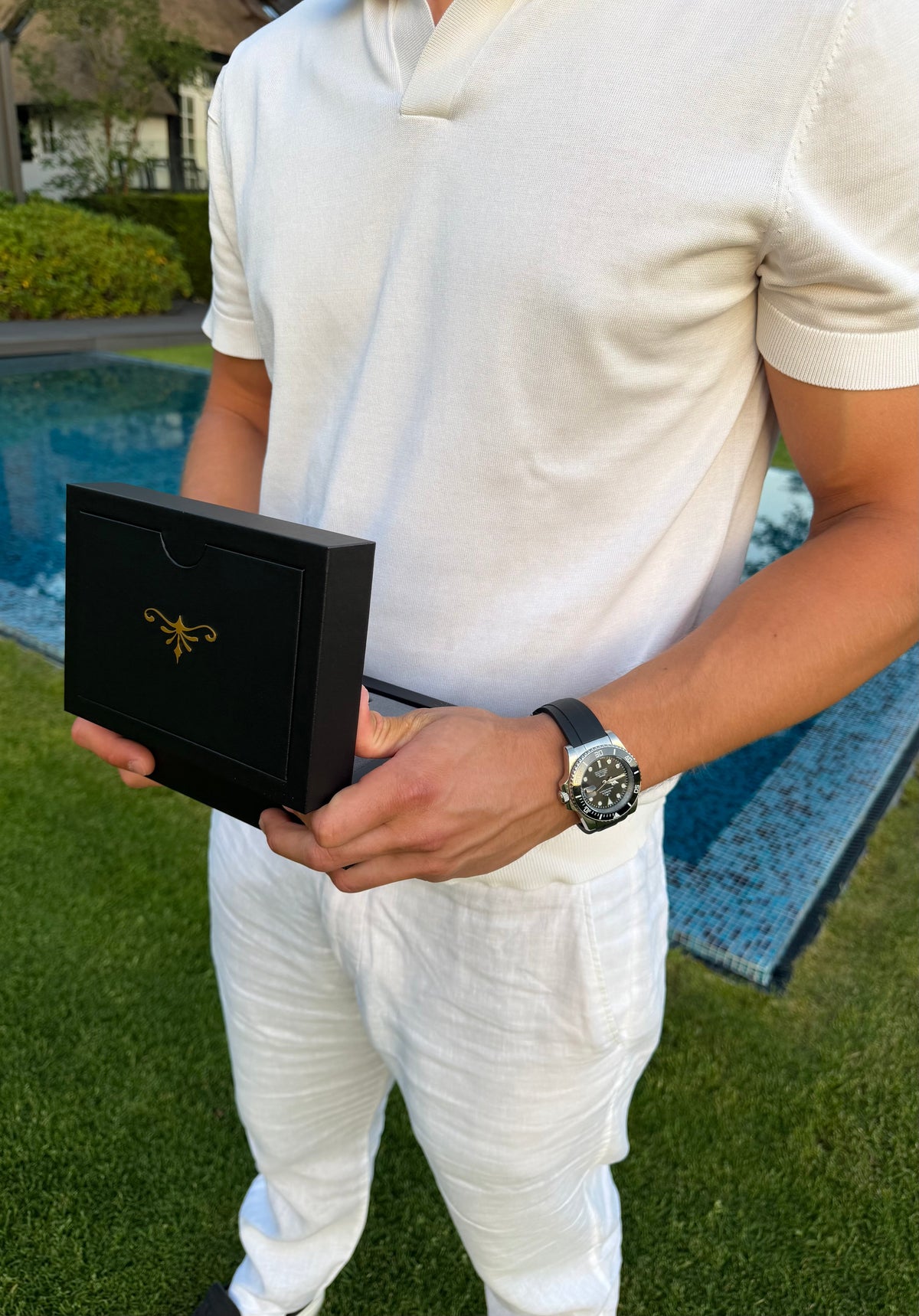
A ceramic bezel is one of the clearest indicators of material quality in a watch. It is also one of the first things brands cut when they need to bring a price down. Understanding why ceramic matters, what it costs to do it properly, and where you can actually find it under €700 will save you both money and disappointment.
What a Ceramic Bezel Actually Is
The bezel is the ring surrounding the watch face. On a dive watch, it is unidirectional and rotatable, used to track elapsed dive time. On a dress watch, it is fixed. In both cases, the bezel is the most exposed part of the watch. It is the first thing that contacts a door frame, a desk edge, or diving equipment.
Ceramic bezel inserts are made from zirconium oxide, also known as zirconia, which rates between 8 and 9 on the Mohs hardness scale. For comparison, sapphire crystal is a 9, and stainless steel is around 6.5. This makes ceramic nearly impossible to scratch under normal daily wear conditions. Only materials harder than zirconia, such as diamond or tungsten carbide tool edges, can mark the surface.
The colour of a ceramic bezel is not a coating or paint applied to the surface. The pigment is mixed into the zirconia powder before sintering, which means the colour runs through the entire material. Even if scratched, there is no paint to come off. The bezel will scarcely show any mark.
Ceramic vs Aluminium: The Honest Difference
Most dive watches under €500 use an aluminium bezel insert. Aluminium is cheaper to produce, easier to machine, and more impact-resistant than ceramic. Those are real advantages. But for a buyer who wants a bezel that looks the same in year five as it did on day one, aluminium has a fundamental problem.
Anodised aluminium bezels scratch from contact with common everyday objects: desk surfaces, keys, dive equipment, and even watch tools during strap changes. After 12 to 18 months of regular wear, an aluminium bezel insert shows visible surface degradation that no amount of cleaning reverses. This is not a quality control failure. It is an inherent property of soft aluminium under mechanical contact.
The trade-off with ceramic is brittleness. Ceramic excels in environments where abrasion is the primary threat, such as office wear, travel, and recreational diving. Aluminium performs better in genuinely rugged conditions where hard knocks against rocks or metal are likely.
For the majority of buyers, the threat is scratches from daily life, not impacts from underwater obstacles. Ceramic is the correct choice.
Why Ceramic Bezel Watches Are Rare Under €700
Ceramic is expensive to produce. It is made by pressing zirconia powder into moulds at enormous pressure and firing it at around 1,400°C. The tooling, sintering, and finishing process adds meaningful cost to the watch. This is why ceramic bezels have historically appeared mainly on watches above €1,000 from retail brands.
Rolex introduced their Cerachrom ceramic bezel technology in 2005, and it quickly became the standard indicator of quality in the sport watch segment. Today, Omega, Tudor, Longines, and most serious Swiss manufacturers use ceramic bezels on their dive watch lines. The entry point for a ceramic bezel from those brands through authorised retailers typically starts around €900 and rises quickly from there.
The gap between €700 and the entry point for established retail brands with ceramic bezels is where direct-to-consumer positioning becomes most relevant. A brand that removes retail margins from the equation can offer the same material specification at a price that established brands cannot reach through their distribution model.
The SOREN Oceanic: Ceramic Bezel Under €700
The SOREN Oceanic is a Swiss Made automatic dive watch with a unidirectional ceramic bezel, starting at €695 for the 3-link version and €725 for the 5-link.
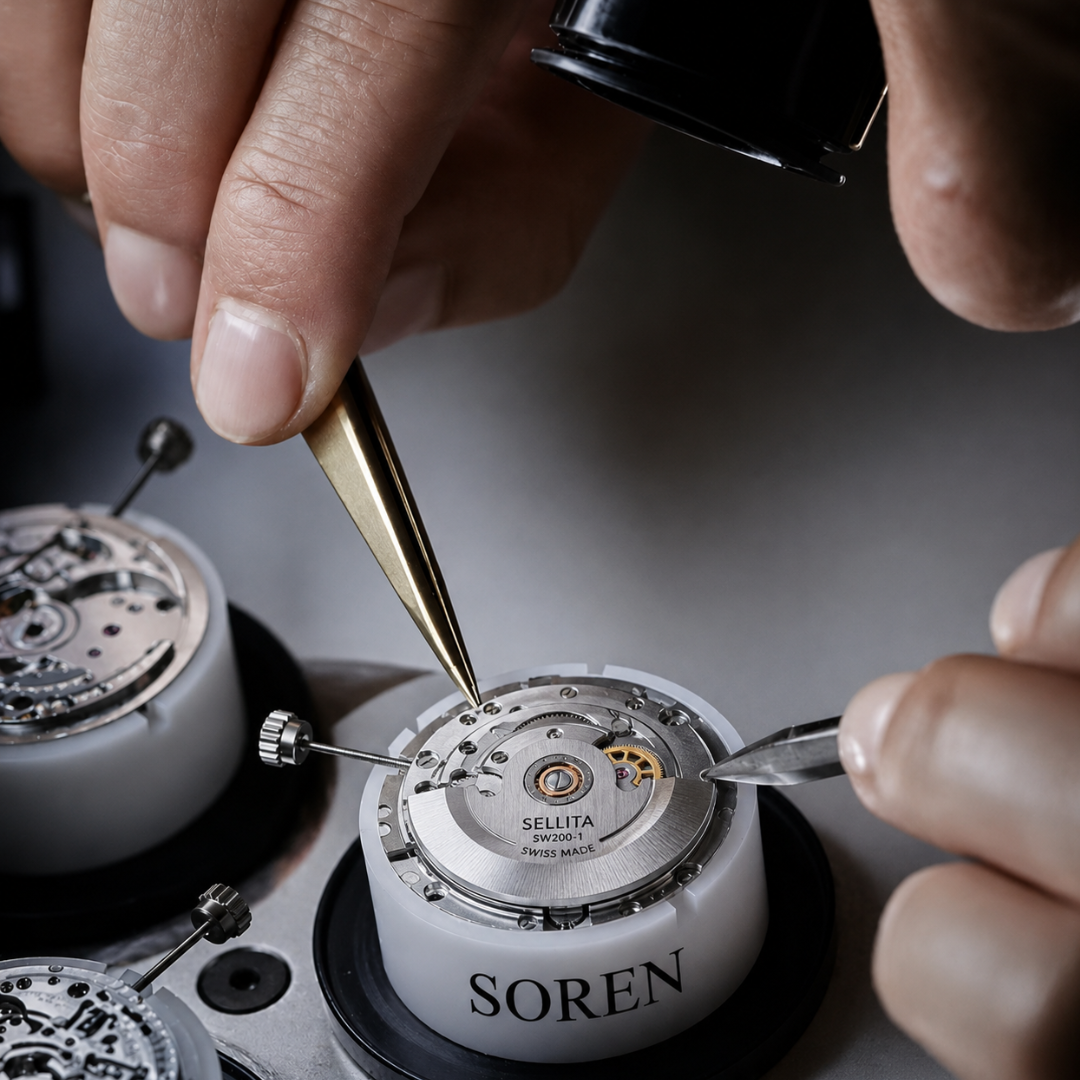
The bezel is unidirectional ceramic, scratch-resistant and colour-stable. The case and bracelet are solid 316L stainless steel with no coating and no plating. The crystal is sapphire. Water resistance is 30 ATM (300 metres), which goes beyond what most competitors in this price range offer. The movement is the Sellita SW200-1, running at 28,800 bph with a 38-hour power reserve and 26 jewels.
Because SOREN sells directly without a retail chain, the price reflects the cost of the watch rather than the cost of distribution. The ceramic bezel, sapphire crystal, and 300-metre water resistance are specifications you would expect to pay €1,000 or above for through an authorised dealer of an established brand.
For a broader comparison of what the Swiss Made segment offers at this price point, the Swiss Made watch for daily wear under €700 guide covers the full landscape.
What to Check Before Buying a Ceramic Bezel Watch
Not all ceramic bezels are equal. Here is what to verify.
Bezel material vs insert material. Some watches have a stainless steel bezel with a ceramic insert. Others have a fully ceramic bezel ring. Both are legitimate but they behave differently under impact. A ceramic insert that chips can sometimes be replaced. A fully ceramic bezel ring that chips requires more extensive repair. For daily wear, a ceramic insert in a steel bezel is often the more practical choice.
Colour through the material. A quality ceramic bezel has colour that runs through the entire piece, not a painted or coated surface. If the specification does not clarify this, ask.
Unidirectional rotation for dive watches. A dive watch bezel must rotate only counter-clockwise. This is a safety requirement: accidental rotation can only reduce the remaining dive time, never extend it. If a bezel rotates in both directions on a watch marketed as a dive watch, that is a specification failure.
Water resistance. A ceramic bezel on a watch rated below 10 ATM is not a dive watch. It is a watch with a ceramic bezel. The distinction matters. 30 ATM (300 metres) is the standard for a serious dive watch. 10 ATM (100 metres) is the minimum for daily wear including swimming.
Crystal. A ceramic bezel on a watch with mineral crystal is an inconsistent specification. Both the bezel and the crystal face the same daily wear environment. If the brand chose ceramic for the bezel to resist scratches, mineral crystal undermines the purpose. Sapphire crystal should accompany any ceramic bezel watch worth buying at this price.
FAQ
Is a ceramic bezel worth it over aluminium?
For daily wear and occasional diving, yes. A ceramic bezel retains its appearance for years under normal use where an aluminium bezel will show visible scratching within 12 to 18 months. The only scenario where aluminium has a practical advantage is in genuinely rugged environments with high impact risk, where ceramic can chip. For office wear, travel, and recreational diving, ceramic is the better long-term choice.
Can a ceramic bezel be repaired if chipped?
Yes, but it typically means replacing the bezel insert or the full bezel assembly rather than repairing the chip. This is more expensive than replacing an aluminium insert. Most watchmakers can source replacement ceramic inserts for common watch models.
Does the colour of a ceramic bezel fade?
No. The colour in a quality ceramic bezel is integral to the material, not a surface treatment. This means UV exposure, saltwater, and years of wear do not affect the colour. An aluminium bezel insert will fade over time from the same exposure. This is one of ceramic's most practical advantages for a watch worn outdoors or near water.
Is a ceramic bezel hypoallergenic?
Yes. Ceramic is hypoallergenic and inert in skin contact. For buyers who experience reactions to metal bezels or coated surfaces, ceramic eliminates the issue. This applies to the bezel specifically. The case and bracelet material remains the relevant factor for wrist contact.
What is the cheapest Swiss Made watch with a ceramic bezel?
Through traditional retail channels, Swiss Made ceramic bezel watches typically start around €900 to €1,000. The SOREN Oceanic at €695 is one of the few Swiss Made automatics with a unidirectional ceramic bezel, sapphire crystal, and 300-metre water resistance available under €700, made possible by selling directly without retail distribution.
Does a ceramic bezel affect water resistance?
No. The bezel material does not affect the water resistance rating of the watch. Water resistance is determined by the case construction, the gaskets, and the crown and caseback sealing. A ceramic bezel is simply a different material for the bezel ring and insert.
The Bottom Line
A ceramic bezel is not a premium feature for its own sake. It is a material choice that determines whether a watch looks the same after five years of daily wear or whether the bezel becomes the most visibly aged part of the watch.
Finding a Swiss Made automatic with a ceramic bezel under €700 through traditional retail is close to impossible. The distribution chain absorbs margin that would otherwise fund better materials. Buying directly changes that equation.
The SOREN Oceanic at €695 is the answer to the question this article asks. Swiss Made, Sellita SW200-1 movement, unidirectional ceramic bezel, sapphire crystal, 316L stainless steel throughout, 300-metre water resistance. The specification is consistent from bezel to crystal to bracelet.
Free EU shipping. 2-year warranty. 30-day returns. Swiss Made. sorenwatches.com


Leave a comment
This site is protected by hCaptcha and the hCaptcha Privacy Policy and Terms of Service apply.