
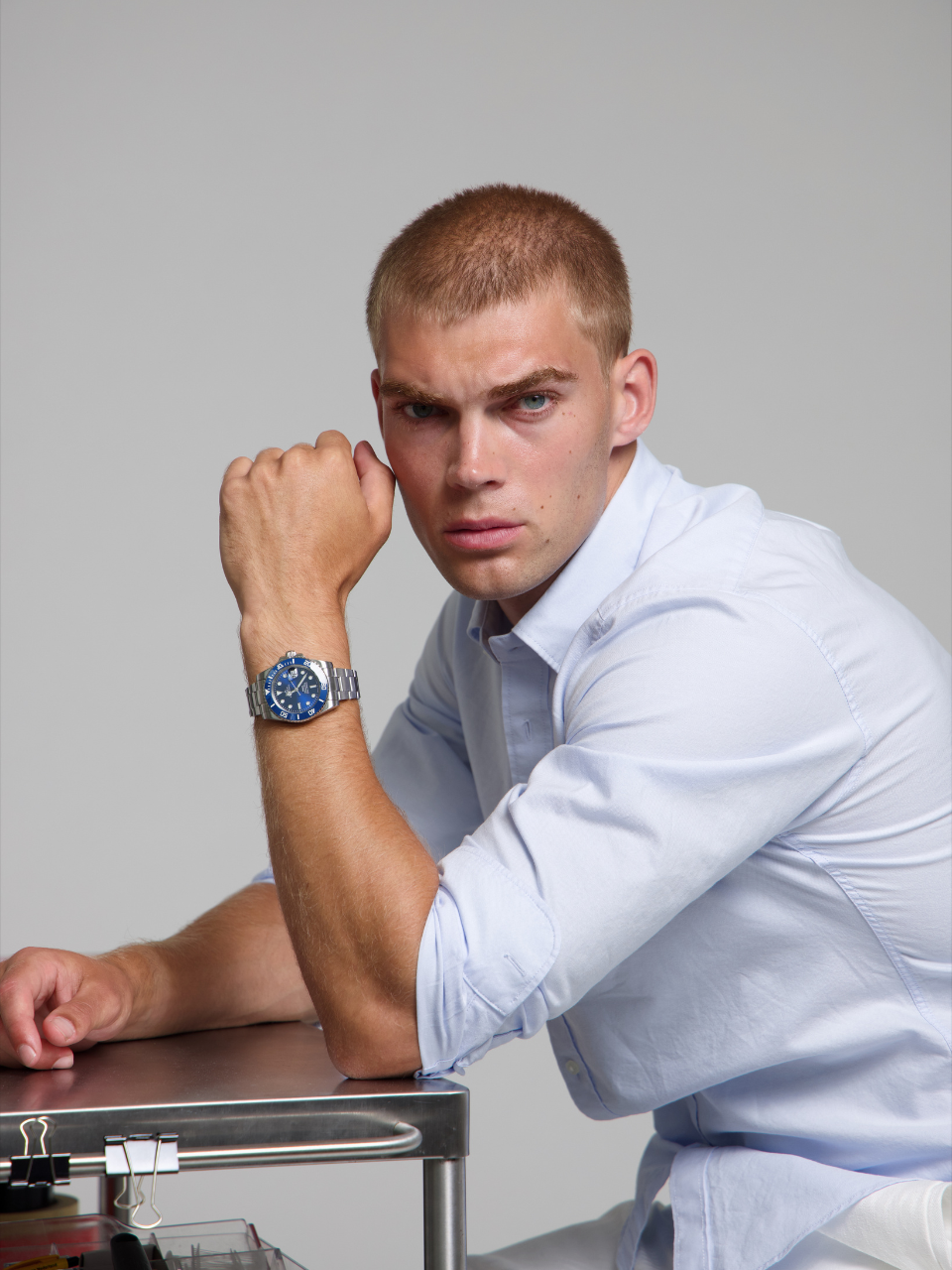
Tissot is, for many people, the default answer to the question "what is a good affordable Swiss watch?" It has been making watches since 1853, it is available in more than 160 countries, and it sponsors the NBA, MotoGP, and the Tour de France. For a first Swiss automatic, it is a reasonable and safe choice.
But "safe" and "best value" are not always the same thing. Over the past few years, a new category of independent Swiss watch brands has emerged that competes directly with Tissot on specifications while operating on a completely different business model. This article compares the two approaches honestly, so you can decide which makes more sense for your money.
We will be fair to Tissot throughout. It is a good brand that makes good watches. The question is not whether Tissot is good. It is whether Tissot is the best use of your budget in 2026.
What Tissot Is
Tissot was founded in Le Locle, Switzerland, in 1853 by Charles-Félicien Tissot and his son Charles-Émile. It has a genuine and rich history, including the world's first anti-magnetic watch in 1930 and a long track record of technical innovation.
Since the 1980s, Tissot has been part of the Swatch Group, the largest watch conglomerate in the world. Swatch Group also owns Omega, Longines, Hamilton, Certina, Mido, and, critically, ETA, the movement manufacturer that supplies calibres across the group. This ownership structure is central to understanding both Tissot's strengths and the value proposition of independent alternatives.
Tissot's positioning within Swatch Group is as an entry-level to mid-range Swiss brand. Its motto, "gold value at silver price," captures the intent. Tissot watches range from around €300 for quartz models to €1,000 and above for automatics. The brand exports several million watches per year, making it one of the highest-volume Swiss watchmakers in the world.
Its defining modern model is the PRX, relaunched in 2021 as a reissue of a 1978 design. The PRX Powermatic 80 offers an integrated steel bracelet, sapphire crystal, 100 metres of water resistance, and the ETA-derived Powermatic 80 movement with an 80-hour power reserve. It has become one of the most popular accessible Swiss watches of the decade, priced from approximately €650.
What an Independent Swiss Brand Is
An independent Swiss watch brand is one that is not part of a large conglomerate. It designs its own watches, sources Swiss-made movements (typically from Sellita, since ETA restricts sales outside the Swatch Group), and, in the direct-to-consumer model, sells straight to the buyer without a retail chain.
SOREN is one such brand. Based in the Netherlands, it produces Swiss Made automatic watches powered by the Sellita SW200-1, the same calibre family that serves as the industry-standard workhorse across Swiss watchmaking. Its two collections, the Momentis and the Oceanic, are priced from €625 and €695 respectively.
The key structural difference is distribution. Tissot sells through authorised dealers, boutiques, and retail partners, each of whom takes a margin. An independent direct-to-consumer brand sells directly, which removes those margins from the final price. This is not a minor detail. It is the entire basis of the value comparison.
Head to Head: The Movement
Tissot's automatics use the Powermatic 80, an ETA-derived movement. Independent brands like SOREN use the Sellita SW200-1.
Here is the honest truth that the watch industry does not always make clear: these movements are near-identical in origin and function. The Sellita SW200-1 was engineered as a direct replacement for the ETA 2824-2, with nearly identical dimensions and interchangeable parts. Both are Swiss Made. Both are proven, reliable, and serviceable by any competent watchmaker.
There is one meaningful difference in the specific comparison of the Powermatic 80 versus the standard SW200-1. The Powermatic 80 offers an 80-hour power reserve, achieved partly by reducing the frequency to 21,600 bph (3 Hz). The SW200-1 runs at 28,800 bph (4 Hz) with a 38-hour power reserve. The higher frequency of the SW200-1 gives a smoother, more fluid seconds sweep. The Powermatic 80 gives a longer power reserve but a slightly less fluid sweep.
Neither is objectively better. It is a genuine trade-off. If you value a long power reserve, the Powermatic 80 wins. If you value a smooth seconds sweep and the traditional 4 Hz frequency, the SW200-1 wins. Both will last decades with proper servicing.
It is also worth noting that Sellita announced the SW200-2 Power+ in 2026, which raises the power reserve to 65 hours while keeping the 28,800 bph frequency, closing much of the gap.
Head to Head: Materials and Specifications
At similar price points, the specifications are closely matched, with some meaningful differences.
Case material. Both use 316L stainless steel. This is the industry standard and the correct choice at this price.
Crystal. Both use sapphire crystal. Correct at this level.
Water resistance. This is where a difference emerges depending on the model. The Tissot PRX offers 100 metres. The Tissot Seastar offers 300 metres and competes with dive watches. The SOREN Oceanic offers 300 metres (30 ATM) with a ceramic bezel, and the Momentis offers 100 metres for daily wear.
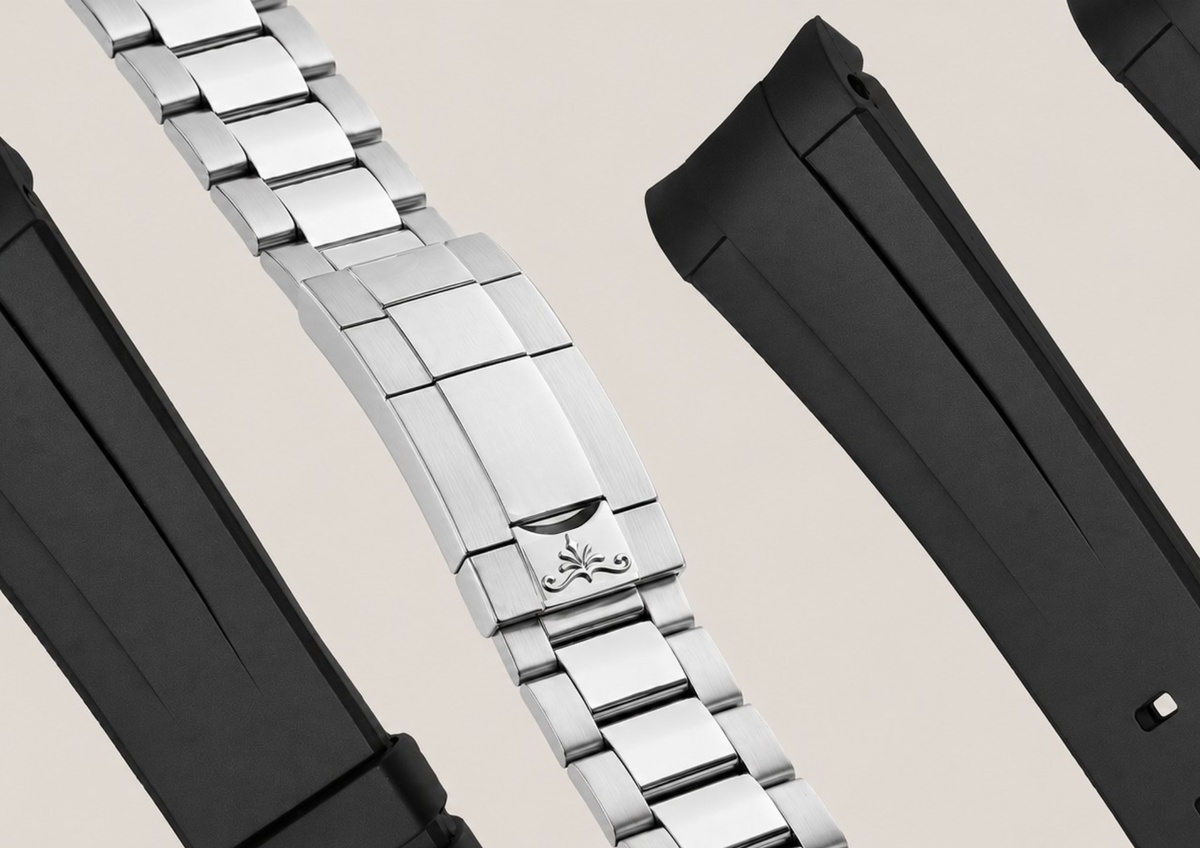
Bracelet. Here is a difference worth checking carefully. The SOREN bracelets are solid 316L stainless steel throughout, with no coating or plating, on both the case and the bracelet. With any brand, and at any price, it is worth confirming that both the case and bracelet use the same grade of solid steel.
Bezel. The Oceanic uses a ceramic bezel, which resists scratches far better than aluminium and holds its colour permanently. Ceramic bezels are rare under €700, and this is a specification where the Oceanic competes with watches costing considerably more. For a full explanation, see the ceramic bezel guide.
Head to Head: Price and Value
This is where the two models diverge most clearly.
A Tissot PRX Powermatic 80 costs approximately €650 through authorised retailers. A significant portion of that price funds Tissot's distribution network, its retail partners' margins, and its substantial global marketing and sponsorship budget. None of this is hidden or dishonest. It is simply how a large retail brand operates.
A SOREN Momentis costs €625 sold directly. There is no retail partner margin, no distributor markup, and no sponsorship budget built into the price. The cost reflects the watch: the movement, the case, the crystal, the bracelet, and the quality control.
The result is that for a similar price, you are buying different things. With Tissot, part of your money buys brand heritage, retail availability, and the reassurance of a name that has existed since 1853. With an independent direct-to-consumer brand, more of your money goes into the watch itself and its materials, and less into the surrounding infrastructure.
For a fuller breakdown of this comparison across the whole segment, the Swiss Made watch for daily wear under €700 guide covers the landscape in detail.
What Tissot Does Better
In the interest of honesty, here is where Tissot has genuine advantages.
Brand recognition. If you want a watch that people recognise, Tissot has 170 years of name recognition. An independent brand does not. For some buyers, that recognition matters, and that is a legitimate preference.
Retail availability. You can walk into a shop in most countries and try a Tissot on your wrist before buying. With a direct-to-consumer brand, you buy online and rely on the return policy if the fit is not right. A strong 30-day return policy mitigates this, but the in-person experience is something Tissot offers that a direct brand cannot fully replicate.
Resale market. Tissot has an established second-hand market. If you plan to sell the watch later, a recognised brand name holds some resale value. Independent brands, being newer, have a less established resale market.
Range. Tissot offers dozens of collections across every style and price point. An independent brand typically offers a focused range of a few models. If you want maximum choice, Tissot has it.
These are real advantages, and for some buyers they are decisive. If brand recognition and resale value are your priorities, Tissot is a sound choice.
What an Independent Brand Does Better
Value per euro. More of your money goes into the watch rather than the retail chain. At the same price, you often get equal or better specifications.
Founder access and service. With a small independent brand, when you email support you often reach the founder or a small dedicated team, not a call centre. The service is personal in a way a global brand cannot match.
Specification for price. A ceramic bezel and 300 metres of water resistance under €700, as on the Oceanic, is difficult to find from a large retail brand at that price. The direct model makes higher specifications affordable.
Distinctiveness. Wearing a watch that not everyone recognises is, for some buyers, a feature rather than a drawback. It signals that you chose based on the watch, not the logo.
FAQ
Is Tissot a good watch brand?
Yes. Tissot is a genuine Swiss Made brand with 170 years of history, reliable movements, sapphire crystals, and strong specifications for the price. It is a safe and sound choice, particularly for a first Swiss automatic. The question is not whether Tissot is good but whether it offers the best value compared to independent alternatives that operate without a retail chain.
Are independent Swiss watch brands as reliable as Tissot?
When they use the same Swiss Made movements, yes. A brand using the Sellita SW200-1 is using the same industry-standard workhorse movement found across Swiss watchmaking. The reliability comes from the movement and the build quality, both of which are comparable. The key is to verify the movement, the materials, and the water resistance rating rather than relying on brand name alone.
Why are independent brands cheaper than Tissot for similar specifications?
Because they sell directly to the buyer without a retail chain. Tissot sells through authorised dealers and boutiques, each of whom takes a margin, and funds a large marketing and sponsorship budget. An independent direct-to-consumer brand removes those costs, so more of the price goes into the watch itself.
Does Tissot hold its value better than an independent brand?
Generally yes, in the second-hand market, because Tissot has established brand recognition and an existing resale market. If resale value is a priority, this favours Tissot. However, most accessible watches, including Tissot, lose value from retail price when sold second-hand. Buying direct from an independent brand means you pay less upfront, which offsets some of the resale difference.
Which should I buy, a Tissot or an independent Swiss brand?
If brand recognition, in-store try-on, and resale value are your priorities, choose Tissot. If value per euro, higher specifications for the price, personal service, and distinctiveness matter more, an independent direct-to-consumer brand like SOREN is worth serious consideration. Both are legitimate Swiss Made choices; the right answer depends on what you value.
Is the Sellita SW200 as good as the Tissot Powermatic 80?
They are near-identical in pedigree, both being Swiss Made workhorse movements. The Powermatic 80 offers a longer power reserve (80 hours) at a lower frequency (21,600 bph). The SW200-1 offers a shorter power reserve (38 hours) at a higher frequency (28,800 bph), giving a smoother seconds sweep. The 2026 SW200-2 Power+ raises the reserve to 65 hours while keeping the higher frequency. Neither movement is objectively superior; it is a trade-off.
The Bottom Line
Tissot is a good brand. Nothing in this comparison should be read as a criticism of the watches it makes. For a buyer who wants a recognised name, the ability to try before buying, and an established resale market, Tissot is a sound and safe choice.
But "safe" is not the same as "best value." At a similar price, an independent direct-to-consumer Swiss brand often delivers equal or better specifications, because the money goes into the watch rather than the retail chain and the marketing budget. A ceramic bezel dive watch with 300 metres of water resistance under €700, or a clean daily automatic at €625 with a solid steel bracelet throughout, is difficult to match from a large retail brand at the same price.
The honest conclusion is this: if you are buying the name and the reassurance, Tissot makes sense. If you are buying the watch, an independent brand often makes more sense. Both are Swiss Made. The difference is where your money goes.
Free EU shipping. 2-year warranty. 30-day returns. Swiss Made. sorenwatches.com


Leave a comment
This site is protected by hCaptcha and the hCaptcha Privacy Policy and Terms of Service apply.