
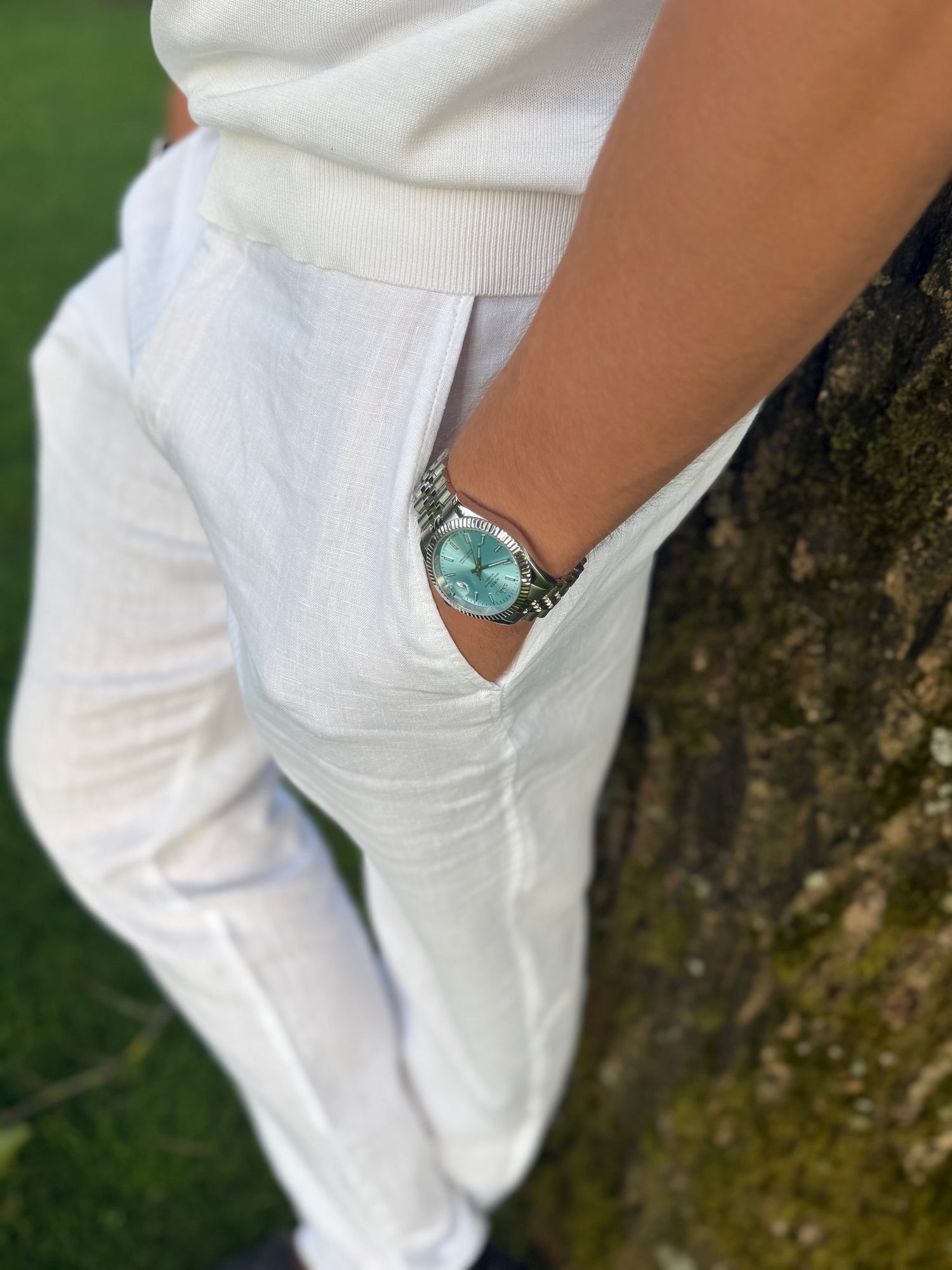
When you read the specifications of a watch, most buyers focus on the movement, the water resistance, or the crystal. The case and bracelet material tends to get less attention. That is a mistake. The material a watch is made from determines how it ages, how it feels on the wrist, how it responds to daily wear, and whether the bracelet still looks the same in five years as it did on day one.
316L stainless steel is the industry benchmark in quality watchmaking. Understanding what it is, why it is used, and what it means for your watch is worth a few minutes of your time before you spend several hundred euros on a timepiece you intend to wear for years.
What Is 316L Stainless Steel?
316L is a specific alloy of iron, chromium, nickel, and molybdenum. Each element plays a defined role in the material's performance.
Iron provides the structural base. It is what makes it steel.
Chromium, present at around 16 to 18%, is responsible for the corrosion resistance. When chromium is exposed to oxygen, it forms a thin, invisible layer of chromium oxide on the surface of the steel. This layer acts as a self-repairing shield against rust, moisture, sweat, and environmental exposure. If the surface is scratched, the chromium oxide layer reforms automatically. This is what makes stainless steel stainless.
Nickel, at 10 to 14%, improves the malleability of the alloy and adds to its corrosion resistance. It also contributes to the material's ability to be polished to a high finish — which is why 316L can be worked to both a brushed and a mirror-polished surface, often on the same watch.
Molybdenum, at 2 to 3%, is what separates 316L from the more basic grades of stainless steel. Molybdenum provides specific resistance to chloride-induced corrosion. Chlorides are found in saltwater, sweat, and a range of everyday liquids. Without molybdenum, the protective chromium oxide layer breaks down when exposed to chlorides, leading to pitting and corrosion. With molybdenum, this resistance is substantially enhanced. In industry testing, 316L showed no rust after 1,000 hours of salt spray exposure, while 304 stainless steel — the grade without molybdenum — showed surface corrosion after 400 hours.
The "L" in 316L stands for "low carbon." A lower carbon content means the steel is more resistant to carbide precipitation during welding and heat treatment. In practical terms for watchmaking, this means greater dimensional stability and reduced risk of corrosion at the points where the case is machined and finished.
316L vs Other Materials: The Honest Comparison
316L vs 304 Stainless Steel
304 stainless steel is cheaper. It is also the grade found in lower-quality watches, kitchenware, and everyday objects. The difference is meaningful for watch wear.
304 lacks molybdenum. This makes it significantly less resistant to chloride corrosion — the kind that comes from daily contact with skin, sweat, and water. Testing shows 316L retains approximately 98% of its original surface condition after prolonged saltwater exposure, while 304 retains around 84% under the same conditions.
For a watch you wear occasionally, the difference is academic. For a watch you wear every day, it is the difference between a bracelet that looks the same after five years and one that shows pitting and dullness well before that.
Brands that use 304 stainless steel rarely specify the grade. If you see "stainless steel" without a grade listed, the chances are it is not 316L.
316L vs 904L Stainless Steel
904L is the steel grade famously used by Rolex. It offers even greater corrosion resistance and takes a higher polish than 316L. It is also harder to machine, more expensive to work with, and the performance difference under normal daily wear conditions is negligible.
Rolex uses 904L partly because they can. Their manufacturing infrastructure has been built around it over decades. For a watch costing €625 to €725, the cost and complexity of 904L is not justified by any real-world improvement in daily wear performance. 316L at this price level is the right choice: it performs beyond what daily wear demands and it machines cleanly enough to achieve the finishes that quality watchmaking requires.
316L vs Titanium
Titanium is lighter than steel and hypoallergenic. Some buyers prefer it for comfort or for specific skin sensitivities. However, titanium scratches more easily than 316L. Industry durability data suggests 316L shows approximately 33% less surface damage than titanium over comparable periods of wear. For a watch where the finish is part of the product, that matters.
316L vs Plated or Coated Bracelets
This is the comparison that matters most for buyers in the accessible watch market. Many watches at price points similar to the SOREN Momentis and Oceanic use a base metal bracelet with a plating or coating — rose gold, gold tone, silver tone, or PVD black — applied over the surface. The watch looks identical to a solid steel option in photographs and in the first weeks of wear.
After six to twelve months of daily wear, the coating begins to show. The finish wears through at contact points: the clasp, the edges of the links, the underside of the bracelet where it meets the wrist. What appears beneath is the base metal, which is often a different colour and a different finish. The result is a bracelet that cannot be restored to its original appearance. It either looks worn or it needs to be replaced.
Solid 316L does not plate or coat. The steel is the same material all the way through. This means that when it scratches — and it will scratch, because that is what daily wear does — a watchmaker can polish it back to its original condition. The finish can be restored. The material cannot be depleted.
This is one of the clearest differentiators between watches that are built to last and watches that are built to look good in the box.
Why Both Case and Bracelet Matter
Many watches at the accessible end of the market use 316L stainless steel for the case but a lower grade or a coated steel for the bracelet. This is a cost decision that is rarely communicated clearly.
The bracelet is the part of the watch that takes the most wear. It contacts more surface area of the skin, it moves and flexes constantly, and its clasp opens and closes multiple times a day. If the bracelet is made from a lesser material, it will show degradation before the case does.
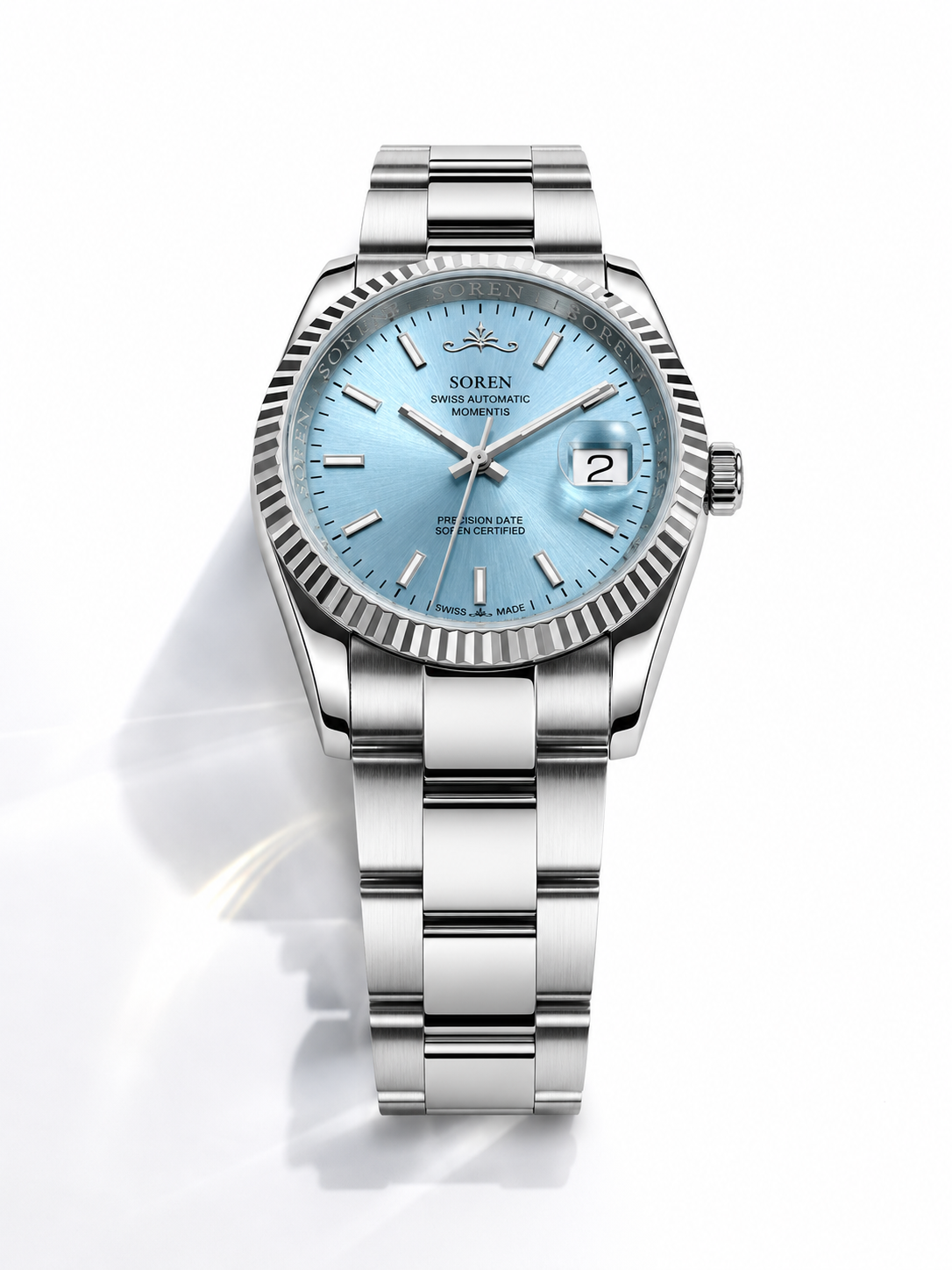
Both the Momentis and the Oceanic use 316L stainless steel for the case and the bracelet. No coating. No plating. The steel is the same material whether it is the case that holds the movement or the links that wrap the wrist. This is documented in the specifications of both watches and it is what we mean when we say "won't fade or discolour."
For a direct comparison of how these specifications stack up against watches at higher retail price points, the Swiss Made watch for daily wear under €700 guide covers the material standards expected across the segment.
How 316L Ages in Daily Wear
316L stainless steel develops a patina of small surface scratches over time. On a brushed surface, this is barely noticeable because the brushing itself creates a directional texture that new scratches blend into. On a polished surface, scratches are more visible.
This is not a defect. It is the natural behaviour of any metal worn daily. The important characteristic of 316L is that these scratches do not compromise the material. The chromium oxide layer reforms around them. The underlying steel is unaffected. A watchmaker can re-brush or re-polish a 316L case and bracelet to return it to its original finish. This is a standard service that costs relatively little and can be repeated throughout the life of the watch.
A coated or plated bracelet cannot be treated this way. Once the coating is gone, the underlying material is exposed. Polishing a plated bracelet removes the remaining coating faster. There is no restoration path.
316L and Skin Contact: The Hypoallergenic Factor
316L stainless steel is considered hypoallergenic for most wearers. Its low carbon content and the presence of molybdenum both reduce the release of nickel from the alloy surface. Nickel is the most common cause of metal allergies.
This does not mean 316L is suitable for everyone with a severe nickel allergy. In such cases, titanium or ceramic alternatives are more appropriate. But for the vast majority of wearers who experience skin reactions from cheaper metals or plated surfaces, 316L resolves the issue. The metal is stable against skin oils and sweat in a way that coated or lower-grade metals are not.
This is worth noting specifically for the bracelet, which is in constant skin contact over extended periods. A material that resists chloride corrosion — which is what molybdenum provides — is also more stable against the chlorides present in human sweat.
What to Check When a Watch Specifies "Stainless Steel"
The phrase "stainless steel" in a watch specification tells you very little on its own. Here is what to look for.
Grade: Is 316L specified? If the listing says "stainless steel" without a grade, contact the brand and ask. A brand that uses 316L will tell you. A brand that does not will usually change the subject.
Case and bracelet separately: Ask whether both the case and the bracelet are 316L. Many brands use 316L for the case but not the bracelet. This is the most common quality compromise at accessible price points.
Coating or solid: Ask whether the bracelet finish is a coating, plating, or solid steel. PVD black, rose gold tone, and gold tone finishes are almost always coatings. Silver and brushed steel finishes may be either solid or coated.
Solid steel bracelet confirmation: The specification should say "solid stainless steel bracelet" or "316L stainless steel bracelet." If it says "stainless steel bracelet" without "solid," assume it may be coated until confirmed otherwise.
The SOREN product pages for both the Momentis and Oceanic specify: "Solid steel — no coating, no plating. Won't fade or discolour." This is a direct answer to exactly this question.
316L in the Context of Swiss Made Watchmaking
316L stainless steel is standard in Swiss Made watchmaking at the quality level that the Swiss Made certification implies. The material works well with the machining tolerances required for Swiss watch cases, and its combination of corrosion resistance and finish quality is appropriate for watches designed to last decades.
The Sellita SW200-1 movement inside the Momentis and Oceanic is built to a similar standard of longevity. A movement designed to run for decades requires a case built to protect it for the same period. 316L provides that protection.
It is also worth noting that the choice of 316L over coated alternatives is a manufacturing cost decision as much as a quality decision. Solid 316L costs more to produce than a coated base metal bracelet. When a direct-to-consumer brand uses solid 316L throughout rather than cutting that cost, it is choosing to put the savings from removing the retail chain into the material rather than into margin.
Frequently Asked Questions
Is 316L stainless steel the same as surgical steel? Yes. 316L is sometimes referred to as surgical stainless steel because it is the grade used in medical implants and surgical instruments. The term "surgical steel" in watch marketing typically refers to 316L, though it is worth confirming.
Will a 316L watch rust? No, under normal daily wear conditions. 316L is resistant to corrosion from water, sweat, saltwater, and most everyday chemicals. Prolonged exposure to extremely aggressive chemicals can affect any metal, but for daily wrist wear, 316L will not rust.
Can 316L be scratched? Yes. 316L scratches like any metal. The advantage is that scratches on a solid 316L bracelet can be polished out. They do not expose a different material underneath, and they do not compromise the structural integrity of the steel.
What is the difference between 316L and 904L? 904L offers greater corrosion resistance and takes a higher polish. It is harder to machine and more expensive. For daily wear under normal conditions, the practical performance difference is negligible. 316L is the correct choice for watches in the €625 to €750 range.
How do I know if a bracelet is solid 316L or coated? Ask the brand specifically. The safest confirmation is a product page that states "solid stainless steel" and specifies 316L for both case and bracelet. If the finish is described as rose gold, gold tone, or PVD, it is a coating.
The Bottom Line
316L stainless steel is not a marketing claim. It is a material specification with defined chemical composition, measurable corrosion resistance, and a clear track record in watchmaking at every price level from accessible Swiss Made to high horology.
What distinguishes quality watches at the accessible price point is not whether the dial looks nice or whether the crown is engraved. It is whether the material used for the case and bracelet is the same grade used in watches costing three times as much.
Both the SOREN Momentis and the Oceanic use solid 316L stainless steel for both case and bracelet, with no coating and no plating. That specification is what keeps the bracelet looking the same in year five as it did on day one.
Free EU shipping on all orders. 30-day returns. 2-year warranty. Swiss Made. sorenwatches.com


Leave a comment
This site is protected by hCaptcha and the hCaptcha Privacy Policy and Terms of Service apply.