
The search for a Swiss Made watch for daily wear under €700 is one of the most rewarding and most frustrating exercises in watchmaking. Rewarding because the segment genuinely delivers. Frustrating because most of what you read online focuses on watches costing twice as much. Guides from established watch media like Teddy Baldassarre rarely venture below the €1,000 mark, which leaves a meaningful gap in the market — and a meaningful gap in the information available to buyers who have a reasonable budget and high standards.
This guide fills that gap. It covers what you actually need from a daily wear watch, what the Swiss Made standard means for quality and reliability, which options genuinely compete at under €700, and what the honest trade-offs look like.
What "Daily Wear" Actually Demands
A watch you wear every day has different requirements than a watch you wear to occasions. The specifications that matter for daily wear are not always the ones watch marketing leads with.
Water resistance. Not because you plan to swim, but because daily wear means hand-washing, rain, coffee, and the occasional splash. A minimum of 5 ATM (50 metres) is the floor. For genuine peace of mind, 10 ATM (100 metres) is the practical target. Anything below 5 ATM is a dress watch in practice, not a daily driver.
Crystal. Sapphire is the only crystal worth considering for daily wear. Mineral glass scratches. Acrylic scratches worse. Sapphire is close to diamond on the hardness scale and will survive years of daily wear without showing significant marks. Any Swiss Made watch worth buying at this price point should have sapphire crystal as standard.
Case and bracelet material. 316L stainless steel is the industry benchmark. It holds its finish, resists corrosion, and does not fade, discolour, or react with skin over time. A watch with a plated or coated bracelet will show wear within months. Solid 316L shows wear within years, and the wear it shows looks like character rather than deterioration.
Movement. For a daily wearer that you intend to keep for years, an automatic movement makes more sense than quartz. Not because automatic is more accurate — it is not — but because automatic watches do not require battery changes and the Sellita SW200-1 or equivalent calibres are built to last for decades with proper care.
Case size. 40mm is the current sweet spot for most wrists. It wears balanced, does not look oversized under a shirt cuff, and hits the proportions that work across both casual and professional settings.
The Swiss Made Standard: What It Guarantees
Before comparing specific watches, it is worth understanding what Swiss Made certification actually guarantees at this price point. The Swiss Made certification is not a marketing phrase. It is a legally defined standard that requires at least 60% of manufacturing value to be generated in Switzerland, the movement to be Swiss-made and assembled in Switzerland, and the final inspection to take place on Swiss soil.
This matters for daily wear because it establishes a baseline of manufacturing quality and quality control that most other national designations do not require. A Swiss Made watch that passes this standard has been individually inspected before leaving the manufacturer.
At under €700, the Swiss Made certified options divide into two clear categories: established retail brands with significant marketing overhead, and direct-to-consumer brands that price without that overhead built in.
The Options Under €700
Tissot PRX Powermatic 80 — from approximately €650
The Tissot PRX is the most discussed Swiss Made watch in this price range in 2026, and the attention is largely justified. The PRX Powermatic 80 offers an integrated stainless steel bracelet, a 40mm case, sapphire crystal, and 100 metres of water resistance. The movement, the Powermatic 80, is an ETA-derived calibre with an 80-hour power reserve, which is genuinely impressive at this price. The dial finishes are clean, and the integrated bracelet design references much more expensive sport-luxury watches from the 1970s.
The PRX's weaknesses are worth naming. The butterfly clasp offers limited micro-adjustment, which makes getting a precise fit difficult without removing additional links. The bracelet, while attractive, has a reputation for catching wrist hair in certain configurations. The movement is accurate but runs at 21,600 vibrations per hour (3 Hz), which is lower than many alternatives and means the sweep of the seconds hand is slightly less fluid than a 28,800 bph calibre. At €650 retail through authorised dealers, it sits at the top of this price bracket.
Certina DS-1 — from approximately €550
Certina is one of the most underrated Swiss Made brands in the accessible segment. The DS-1 is a clean dress automatic with COSC chronometer certification, meaning each watch has been individually tested and proven accurate to within -4/+6 seconds per day. At under €600, a COSC-certified Swiss Made watch is a genuine rarity.
The DS-1's limitation is its daily wear positioning. The design reads more as a dress watch than an everyday tool. Water resistance varies by configuration, but some versions offer only 5 ATM, which is the minimum for daily wear. For office wear and smarter occasions it is an excellent choice. For an active daily life, the specifications are tighter.
Hamilton Khaki Field Automatic — from approximately €545
Hamilton's Khaki Field is one of the most honest watches in this price range. It makes no claims beyond what it delivers: a robust, legible automatic on a leather strap or bracelet, with the H-10 calibre offering an 80-hour power reserve, 100 metres of water resistance, and genuine field watch durability. Hamilton is Swiss Made via the Swatch Group, which shares manufacturing infrastructure with Tissot and Longines.
The Khaki Field's limitation for daily wear is partly aesthetic. Its military heritage look is distinctive and purposeful, but it is less versatile across professional and social contexts than a cleaner dress or sport watch. For buyers who want something that works across every context without demanding attention, the design may be more specific than the use case requires.
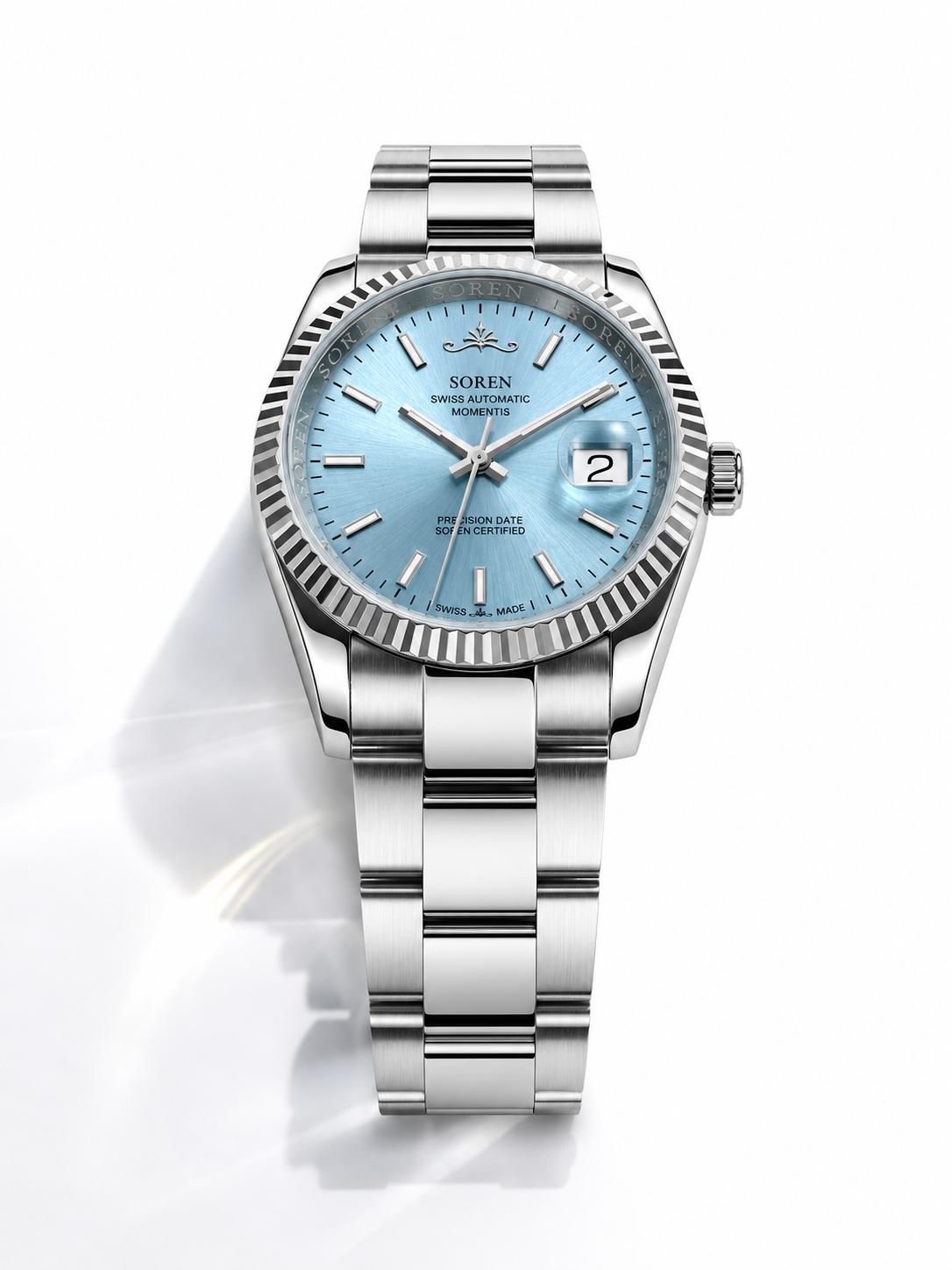
SOREN Momentis — from €625
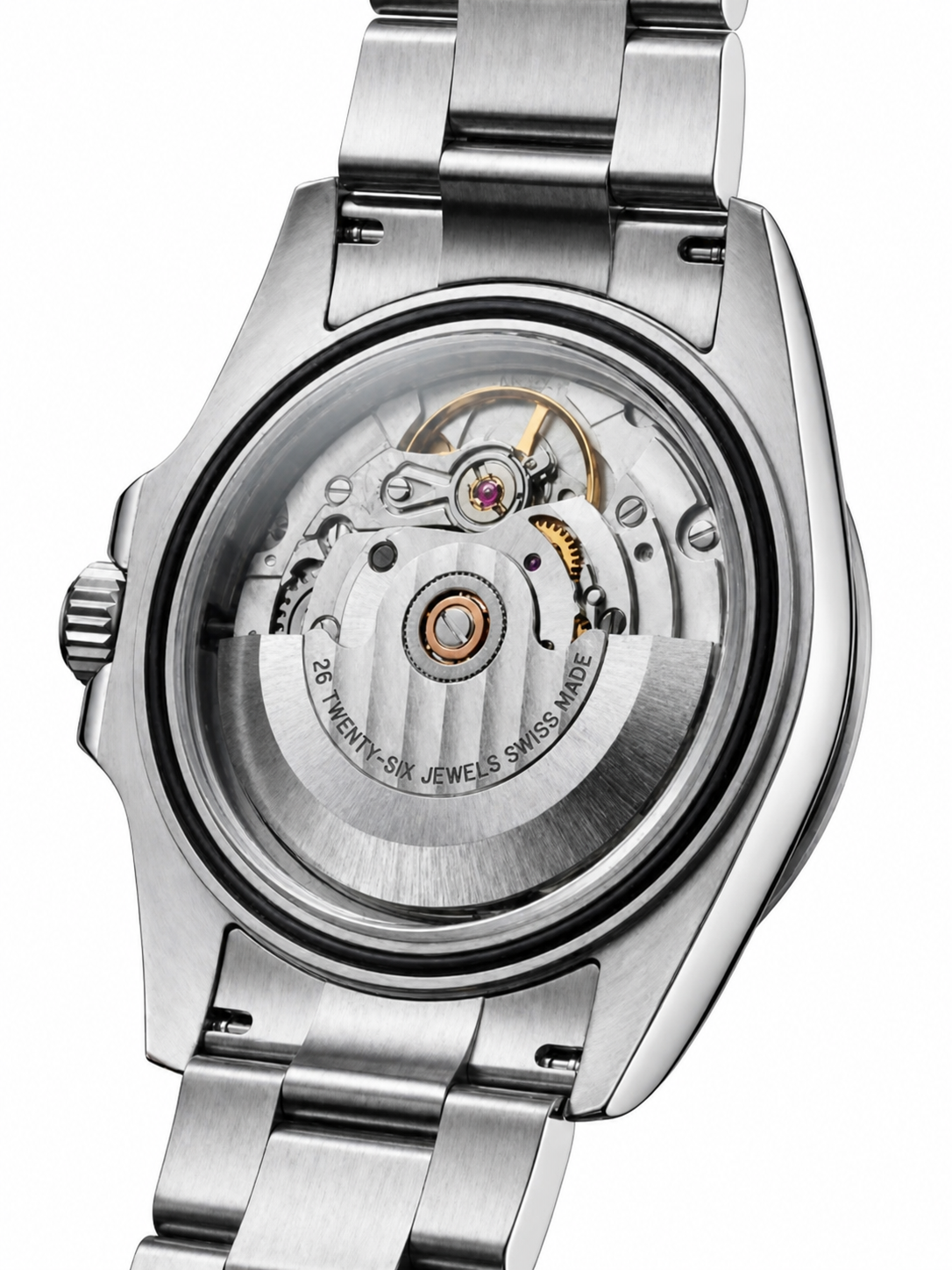
The SOREN Momentis is a direct-to-consumer Swiss Made automatic designed specifically for daily wear. Its 40mm 316L stainless steel case pairs with a Sellita SW200-1 movement — the same calibre family as the ETA 2824-2, which is the industry standard used across watches at two to three times the price. Water resistance is 10 ATM (100 metres). Crystal is sapphire. The bracelet is solid 316L stainless steel with no coating and no plating, which means it will not fade or discolour over time.
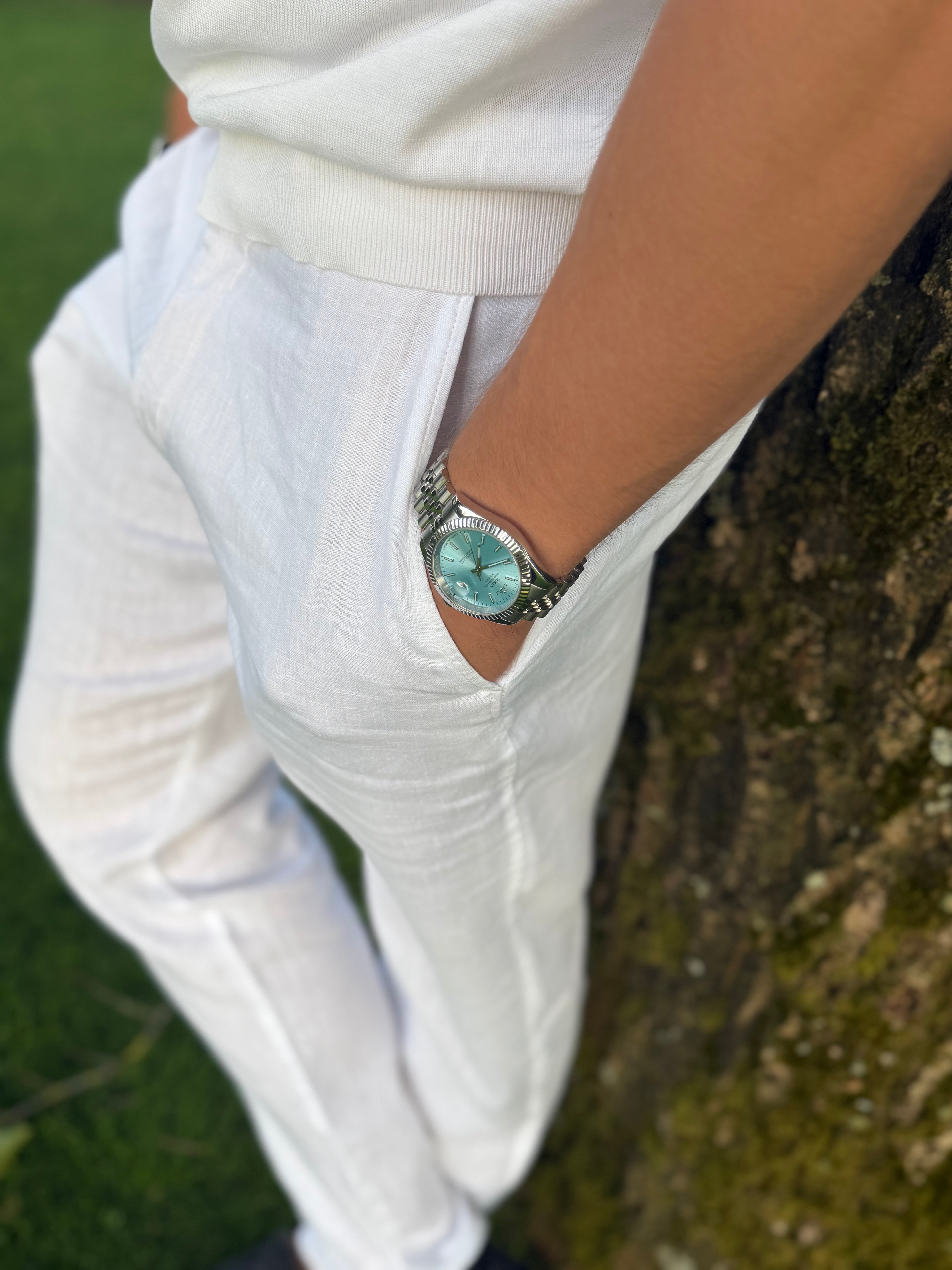
The Momentis is available with both an 3-link and a 5-link bracelet, giving buyers a choice between two established and proven bracelet designs. The movement beats at 28,800 vibrations per hour, which means a fluid seconds sweep and a movement specification that matches watches costing significantly more.
Because SOREN sells directly to the buyer without a retail chain, the Momentis sits at €625 for specifications that a traditional retail brand would price at €1,200 or above. The savings come from the distribution model, not from compromises in the watch itself. For a full comparison of how the Sellita SW200-1 performs against more expensive alternatives, read the SOREN movement guide.
The Retail Premium Problem
To understand why the Momentis and the PRX sit at similar prices but represent different value propositions, it helps to understand how Swiss watch pricing works at this level.
Tissot is owned by the Swatch Group. The PRX sells through authorised dealers and official boutiques. Each of those distributors takes a margin. Tissot's global marketing budget — NBA timekeeping, MotoGP, Tour de France — is built into every price. None of this is a criticism of Tissot. They make good watches. But when you pay €650 for a Tissot, a meaningful portion of that is paying for distribution and brand spending, not for the watch.
A direct-to-consumer brand removes that layer. The cost of the watch — movement, case, crystal, bracelet, quality control — is what determines the price. No boutique rent. No distribution margin. No sponsorship budget. For the buyer, this means more watch per euro.
This is the same principle that explains why the Sellita SW200-1 appears in watches from €300 to €2,000. The movement does not know what brand name is on the dial.
What to Look For: A Checklist
Before buying any Swiss Made daily watch under €700, check the following.
Movement origin. Is it specified? A brand that names its movement and explains its specifications is a brand that stands behind the product. Vague references to "Swiss automatic" without naming the calibre are a warning sign.
Crystal. Sapphire is the baseline. Mineral glass is a compromise. If a watch at this price does not have sapphire crystal, it is either cutting corners or compensating elsewhere.
Water resistance. 10 ATM as the standard for daily wear. 5 ATM if your life is primarily indoor and dry. Less than 5 ATM means you are buying a dress watch, not a daily driver.
Bracelet material. Ask specifically whether the bracelet is solid 316L or coated steel. Coated steel looks the same in a photograph but shows wear within months of daily use. Solid steel holds its finish for years.
Return policy. A brand that offers 30 days to return a watch is a brand that believes in its product. One that limits returns or charges restocking fees is managing for defects rather than confidence.
Swiss Made vs Japanese Automatic: Does It Matter for Daily Wear?
For completeness, it is worth addressing the comparison that often appears in this price range. Japanese automatics from Seiko and Citizen offer strong specifications at lower prices. A Seiko Presage or Seiko 5 delivers solid build quality, reliable movements, and honest daily wear performance at €300 to €450.
The honest answer is that for purely functional daily wear, a Japanese automatic at €350 does its job. The difference between Swiss Made and Japanese automatic is partly manufacturing heritage, partly certification, and partly the premium that certification commands.
Where Swiss Made makes the clearer case is in the movement pedigree. The ETA and Sellita calibre families that power the Swiss Made options in this guide have service networks, parts availability, and watchmaker familiarity that stretch across decades. When a Sellita SW200-1 needs servicing in twenty years, there will be watchmakers who know it as well as they know any movement in the industry. The same is not universally true for Japanese alternatives at the accessible end.
For buyers who view a watch as a long-term purchase rather than a periodic replacement, Swiss Made adds practical value beyond the certification itself.
The Case for Buying at €625 Rather Than Waiting for €1,200
The most common objection to buying a Swiss Made watch under €700 is that a larger budget would unlock meaningfully better watches. This is true at certain price points: the jump from €700 to €2,000 does bring better finishing, more established brand names, and in some cases more complicated movements.
But the jump from €625 to €1,200 at the retail level often buys primarily more brand recognition, not more watch. The movement in a €1,200 Tissot Seastar is not fundamentally superior to the Sellita SW200-1 in a €625 Momentis. The sapphire crystal in a €1,200 Hamilton is no harder than the one in a €695 SOREN Oceanic. The 316L steel in a €1,100 watch does not hold its finish any better than the 316L in a €625 watch.
The price difference in the retail market is, in large part, the cost of distribution. If you buy direct, you receive the watch at the cost of the watch.
Frequently Asked Questions
Is a Swiss Made watch under €700 worth buying? Yes, without reservation. At this price point, Swiss Made certification, automatic movements, sapphire crystal, and 316L steel are all accessible. The specifications are not compromises. What you give up is primarily brand prestige, not watch quality.
What is the best Swiss Made watch for everyday use under €700? It depends on what you prioritise. For an integrated bracelet and strong movement with 80-hour power reserve: Tissot PRX Powermatic 80. For a direct-to-consumer Swiss Made automatic with the same movement family at a lower effective price per specification: SOREN Momentis. For COSC certification in a dress watch: Certina DS-1.
How long will a Swiss Made automatic last as a daily watch? With proper care, a Swiss Made automatic with a Sellita or ETA-based movement can last thirty to fifty years. These movements are designed for service intervals of five to seven years, after which a watchmaker cleans, lubricates, and regulates the calibre. A well-maintained Swiss automatic is not a periodic replacement purchase. It is a long-term ownership proposition.
Do I need a high water resistance rating for daily wear? 10 ATM (100 metres) is the practical standard for daily wear. It handles rain, hand-washing, and most water contact without risk. If you swim with your watch or participate in water sports, look for 20 ATM or higher. If your daily life is primarily indoor and dry, 5 ATM is sufficient for accidental splashes.
What is the difference between the SOREN Momentis and the Tissot PRX? The Momentis uses a Sellita SW200-1 running at 28,800 bph. The PRX Powermatic 80 uses an ETA-derived calibre running at 21,600 bph. The Momentis has a cleaner, more classic design language. The PRX has an integrated bracelet with more sport-luxury visual references. Both are Swiss Made, both have sapphire crystal, and both offer 10 ATM water resistance. The Momentis is priced at €625 through direct purchase; the PRX Powermatic 80 sits at approximately €650 through authorised retailers. The difference is primarily aesthetic and in the distribution model.
The Bottom Line
A Swiss Made watch for daily wear under €700 is not a compromise. It is a decision about where the value sits.
The watches in this guide all deliver on the fundamentals: Swiss manufacturing, proven automatic movements, sapphire crystal, and 316L stainless steel. The difference between them is in design language, brand recognition, and distribution model.
If you want an established brand name and a design that references the most celebrated sport watches of the past fifty years, the Tissot PRX Powermatic 80 at €650 is the clear recommendation.
If you want the same movement specification, the same materials, and the same Swiss Made certification at a price that reflects the watch rather than the retail chain, the SOREN Momentis at €625 is the most direct route.
The case, the crystal, the bracelet, and the movement are not meaningfully different between those options. The price difference goes to Tissot's distribution network, its sponsorship programme, and its retail partners. Not to the watch.
Free EU shipping on all orders. 30-day returns. 2-year warranty. Swiss Made. sorenwatches.com


Leave a comment
This site is protected by hCaptcha and the hCaptcha Privacy Policy and Terms of Service apply.