
The Complete Guide to Swiss Made Certification (2026)
Two words at the bottom of a dial. Swiss Made. You see them on a Rolex Daytona and on a Tissot PRX. You see them on watches costing €50,000 and on watches costing €625. But what do they actually mean, who enforces them, and why should you care?
This is not a marketing label. It is a legal standard, defined by Swiss federal law and enforced by the Federation of the Swiss Watch Industry. A brand cannot simply print "Swiss Made" on a dial because it sounds premium. It has to earn it, and the requirements are stricter than most people think.
This guide covers everything: the exact legal requirements, the history of how the standard developed, the significant 2017 tightening of the rules, how the certification is enforced, the common misconceptions, and what it all means for what you pay. By the end, you will understand Swiss Made better than the vast majority of people who buy Swiss watches.
The Four Legal Requirements
For a watch to carry the Swiss Made label, it must meet four criteria defined by the Swiss Federal Council's ordinance governing the use of the "Swiss" designation for watches. These requirements were significantly tightened in 2017 under what is known as the Swissness legislation.
1. The movement must be Swiss
The mechanical or quartz movement inside the watch must itself qualify as Swiss. For a movement to be considered Swiss, it must be assembled in Switzerland, inspected by the manufacturer in Switzerland, and at least 60% of its value must be of Swiss origin.
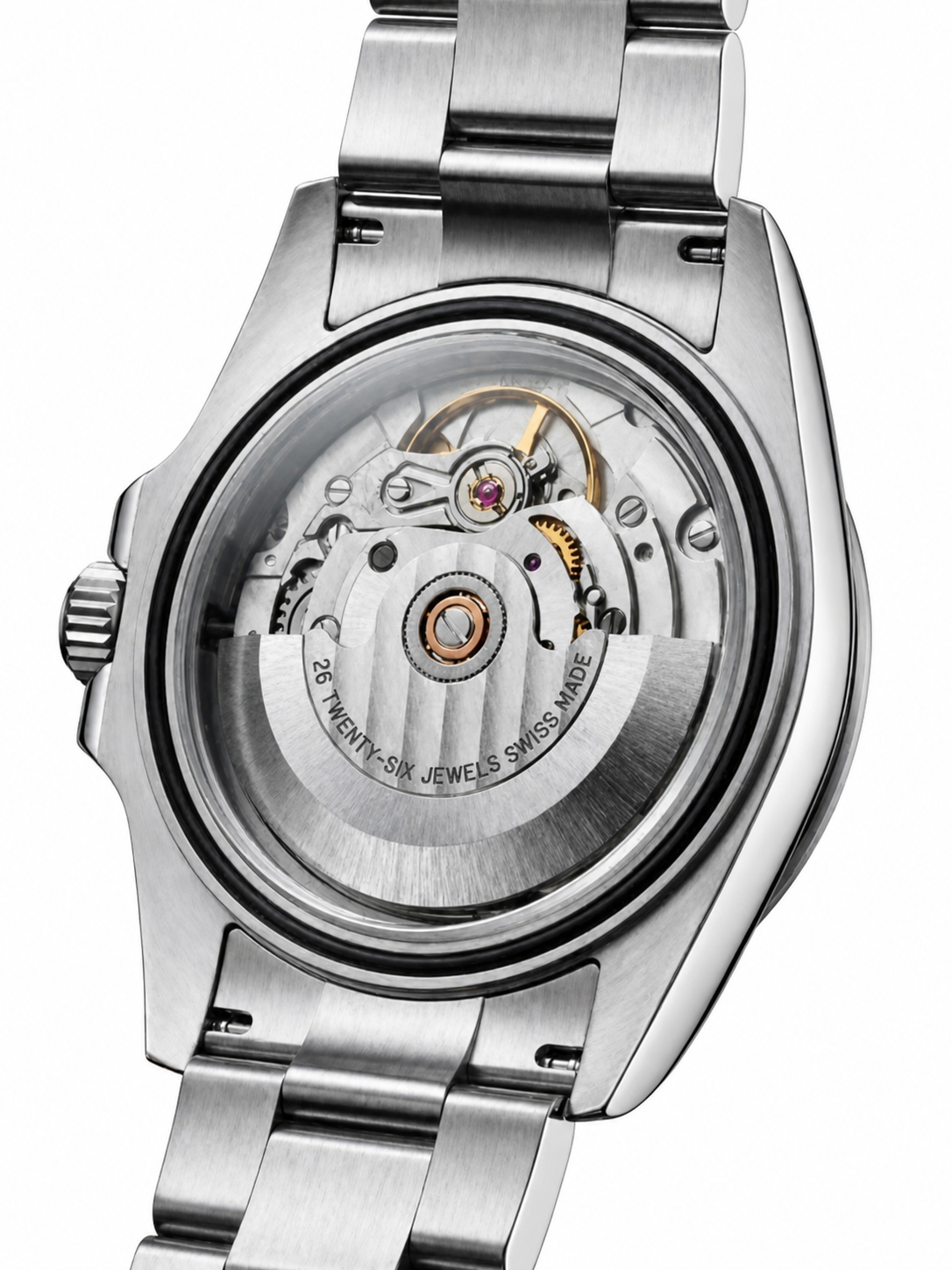
The Sellita SW200-1, for example, is manufactured entirely in Switzerland by Sellita, one of the country's most established movement makers. It meets every criterion for Swiss classification. This is the same calibre family used across watches from €625 to well over €2,000.
2. The movement must be cased up in Switzerland
Casing up means the process of fitting the movement into the case, attaching the dial and hands, and assembling the complete watch. This must happen in Switzerland. A brand cannot assemble its watches abroad and call them Swiss Made, even if the movement inside is Swiss.
3. Final inspection must take place in Switzerland
Every Swiss Made watch must undergo its final quality inspection on Swiss soil. This covers accuracy, water resistance, visual inspection, and overall quality control. The purpose is to ensure that the finished product meets the standard the label promises before it leaves the country.
4. At least 60% of manufacturing costs must be Swiss
At least 60% of the total manufacturing cost of the complete watch must be generated in Switzerland. This is the criterion that was strengthened most significantly in 2017. It means the majority of the value in the watch, from components to labour, must genuinely come from Swiss production, not just the movement.
Together, these four requirements form one of the most protected and legally rigorous geographical designations in any industry in the world.
The History: How Swiss Made Developed
To understand why the standard matters, it helps to understand how it came to exist.
Swiss watchmaking established its global reputation over centuries, from the Huguenot craftsmen who brought watchmaking to Geneva in the 16th century, through the industrial precision of the 19th century, to the mechanical mastery of the 20th. By the early 1900s, "Swiss" on a watch dial had become a genuine mark of quality that commanded a premium worldwide.
That premium created an incentive to abuse it. Manufacturers outside Switzerland, and some within, sought ways to attach the Swiss name to watches that did not deserve it. In response, Switzerland began legally regulating the use of the designation.
The first formal legal definition of "Swiss Made" for watches came in 1971, when the Swiss Federal Council issued an ordinance defining the conditions under which a watch could carry the label. That 1971 ordinance set the original threshold: a watch was Swiss if its movement was Swiss, it was cased up in Switzerland, and the final inspection took place in Switzerland, with at least 50% of the movement's components being of Swiss manufacture by value.
For decades, that 50% movement-based threshold was the standard. But it had a significant weakness, which the industry spent years debating before finally closing it in 2017.
The 2017 Swissness Reform: What Changed and Why
Before 2017, the rules focused primarily on the movement, and the value threshold was 50%. This created a grey area that some brands exploited.
Under the old rules, a brand could use a Swiss movement, meet the 50% movement threshold, and then assemble the rest of the watch, the case, dial, hands, and bracelet, using cheaper foreign components. The final watch could still legally carry the Swiss Made label even though a substantial part of its total value came from outside Switzerland. The label technically applied, but it no longer fully reflected what buyers believed it meant.
The 2017 reform, part of the broader Swissness legislation that came into force on 1 January 2017, closed this gap in two important ways.
First, it raised the value threshold from 50% to 60%. More of the watch's value now has to be Swiss.
Second, and more importantly, it extended the requirement beyond just the movement to the watch as a whole. Under the new rules, at least 60% of the total manufacturing costs of the complete watch, not just the movement, must be generated in Switzerland. This meant brands could no longer put a Swiss movement in a largely foreign-made watch and claim Swiss Made status.
The reform forced brands to genuinely invest in Swiss production across the entire watch. Some brands that had been cutting corners either increased their Swiss content or lost the right to the label. For buyers, the practical effect is clear: a Swiss Made watch purchased today meets a stricter standard than one purchased before 2017. The label carries more weight now than at any point in its history.
Who Enforces Swiss Made?
A standard is only as strong as its enforcement. Swiss Made is backed by one of the most active enforcement bodies in the watch industry: the Federation of the Swiss Watch Industry, known by its French initials FH.
The FH represents the majority of Swiss watch producers and actively monitors the use of the Swiss Made designation globally. It pursues legal action against companies that misuse the label, whether they are counterfeiters applying it to fake watches or legitimate companies applying it to watches that do not meet the criteria.
The FH operates across key markets, including significant enforcement activity in Hong Kong, mainland China, and the United States, where much of the world's watch and counterfeit trade is concentrated. It works with customs authorities, brings trademark and unfair competition actions, and maintains legal watch over the designation worldwide.
This enforcement is why the Swiss Made label retains its value. Unlike a vague marketing term that anyone can use, Swiss Made is a legally defended designation with an organisation whose specific purpose includes protecting it. When you see Swiss Made on a dial, it means something precisely because it is enforced.
What Swiss Made Does Not Mean
There are several common misconceptions worth addressing directly.
It does not mean every single part is made in Switzerland. Some components, such as straps, crystals, or certain raw materials, can be sourced internationally as long as the 60% total value threshold is met. What matters is the total manufacturing value, not the origin of every individual screw.
It does not mean the brand itself is Swiss. A Dutch brand, a German brand, or an American brand can produce Swiss Made watches, as long as the manufacturing process meets the four criteria. What matters is where the watch is made, not where the company is headquartered.
SOREN, for example, is a Dutch brand based in Apeldoorn. But every SOREN watch is manufactured, assembled, and inspected in Switzerland with a Swiss movement, meeting all four criteria for the Swiss Made label. This is entirely legitimate and increasingly common, as covered in the guide to Dutch watch brands in 2026.
It does not guarantee a specific price. Swiss Made watches range from under €500 to over €500,000. The label certifies origin and manufacturing standards, not price. A Swiss Made watch at €625 uses the same certification process as one at €5,000. The difference in price comes from brand positioning, retail distribution, complications, and materials, not from the Swiss Made standard itself.
It does not automatically mean the highest possible quality. Swiss Made is a floor, not a ceiling. It guarantees that the watch meets a defined standard. It does not tell you how far above that standard a particular watch goes. Two Swiss Made watches can differ significantly in finishing and materials while both meeting the same baseline certification.
Swiss Made vs Swiss Movement vs Swiss Parts
You will occasionally see watches labelled "Swiss Movement" or "Swiss Parts" instead of "Swiss Made." These are not the same thing, and the difference matters.
Swiss Made is the highest classification. It means the complete watch, not just the movement, meets all four criteria described above.
Swiss Movement means the movement inside is Swiss, but the watch itself may be assembled elsewhere. The case, dial, hands, and bracelet could be made anywhere in the world. You are getting a Swiss engine in a body that may not be Swiss.
Swiss Parts is even less specific. It indicates that some Swiss components are used, but neither the movement nor the watch as a whole necessarily meets Swiss Made standards.
If you are buying a watch specifically for its Swiss credentials, look for "Swiss Made" on the dial, not "Swiss Movement" or "Swiss Parts." The dial text is legally regulated. A brand cannot print "Swiss Made" unless the watch qualifies under all four criteria.
Swiss Made vs COSC: Two Different Certifications
A common point of confusion is the difference between Swiss Made and COSC certification. They are entirely separate standards that measure different things.
Swiss Made certifies origin and manufacturing. It tells you where and how the watch was made.
COSC, the Contrôle Officiel Suisse des Chronomètres, certifies accuracy. A COSC-certified movement has been individually tested over 15 days in five positions and three temperatures, and proven accurate to within -4/+6 seconds per day. Only then can it be called a chronometer.
A watch can be Swiss Made without being COSC certified, and in rare cases a movement could be COSC certified without the complete watch being Swiss Made. They are independent. Most Swiss Made watches are not COSC certified, because COSC certification adds cost and is reserved for watches marketed specifically on their accuracy. When a watch is both Swiss Made and COSC certified, it meets both the origin standard and the accuracy standard.
What Swiss Made Means for Quality
The certification guarantees origin and manufacturing standards. But does it guarantee quality? In practice, to a significant degree, yes.
The 60% value threshold means the majority of the watch, including the movement, must come from Swiss manufacturers who operate within one of the most regulated and quality-focused manufacturing ecosystems in the world. Swiss movement makers such as Sellita, ETA, and others maintain tolerances measured in fractions of a millimetre. The entire infrastructure exists specifically to produce precision instruments.
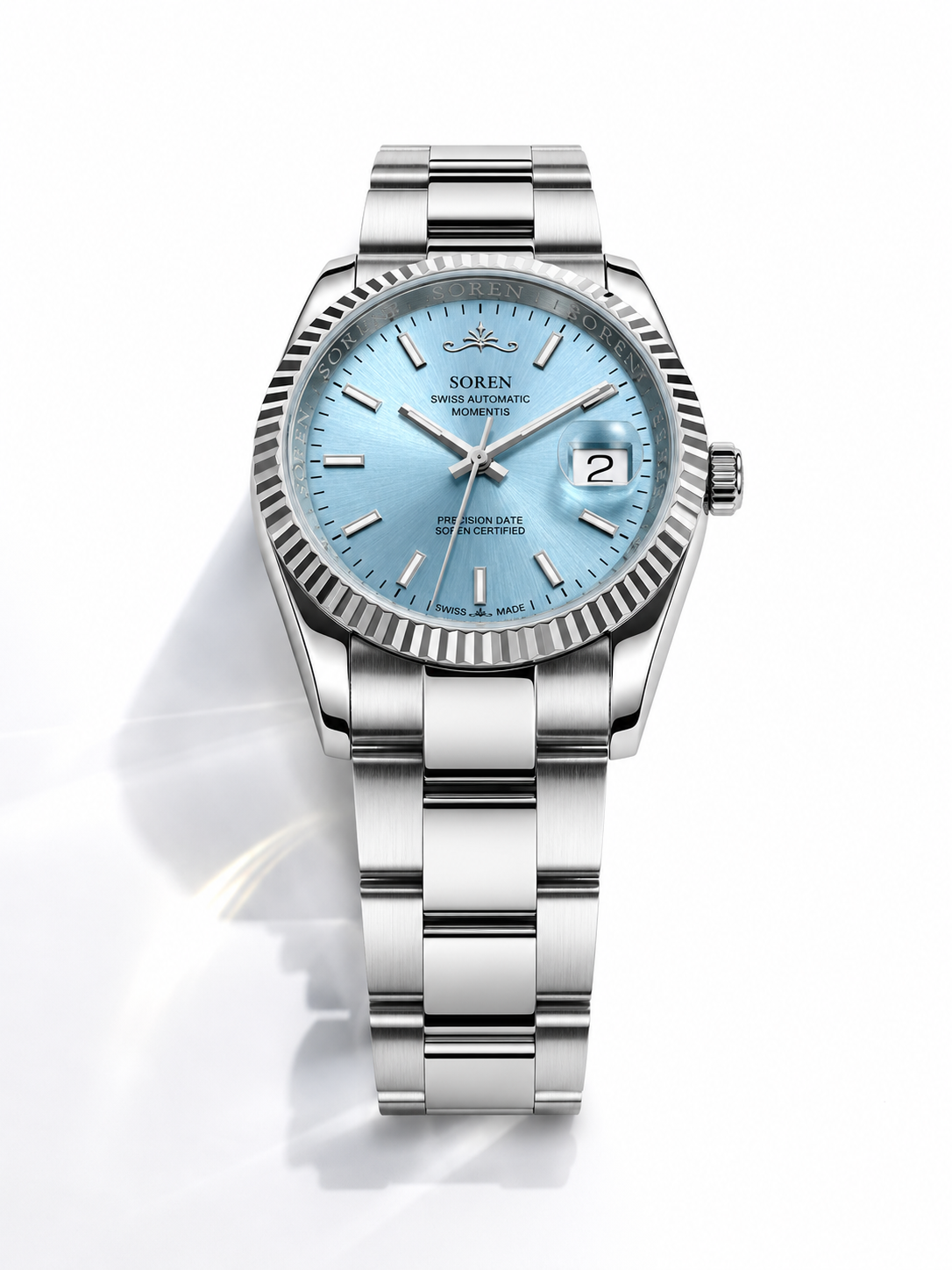
The Sellita SW200-1, used in both the SOREN Momentis and the SOREN Oceanic, beats at 28,800 vibrations per hour, offers a 38-hour power reserve, and is accurate to within a few seconds per day in normal wear. These specifications are functionally identical to movements found in Swiss watches costing two to three times as much. The movement does not know what brand name is on the dial.
That said, Swiss Made tells you the watch meets a defined standard. It does not tell you how far above that standard a particular brand goes. For that, you need to look at the specific specifications: the movement, the crystal, and the case and bracelet material.
Why Swiss Made Costs What It Costs
This is the question that matters most for buyers. If two watches use the same movement and the same materials, why does one cost €625 and another €1,500?
The answer is not the Swiss Made certification. It is the distribution chain.
A traditional Swiss watch brand sells through authorised dealers, jewellers, and boutiques. Each intermediary takes a margin. The distributor adds 30 to 50%. The retailer adds another 50 to 100%. By the time the watch reaches your wrist, you have paid for the brand's marketing department, the jeweller's rent on a high-street location, and the distributor's logistics operation. The watch itself, the movement, case, crystal, and bracelet, accounts for a fraction of the retail price.
Direct-to-consumer brands bypass this chain entirely. The watch goes from the Swiss manufacturer to the brand's warehouse to your door. No distributor, no retailer, no boutique markup. The savings go back to the buyer.
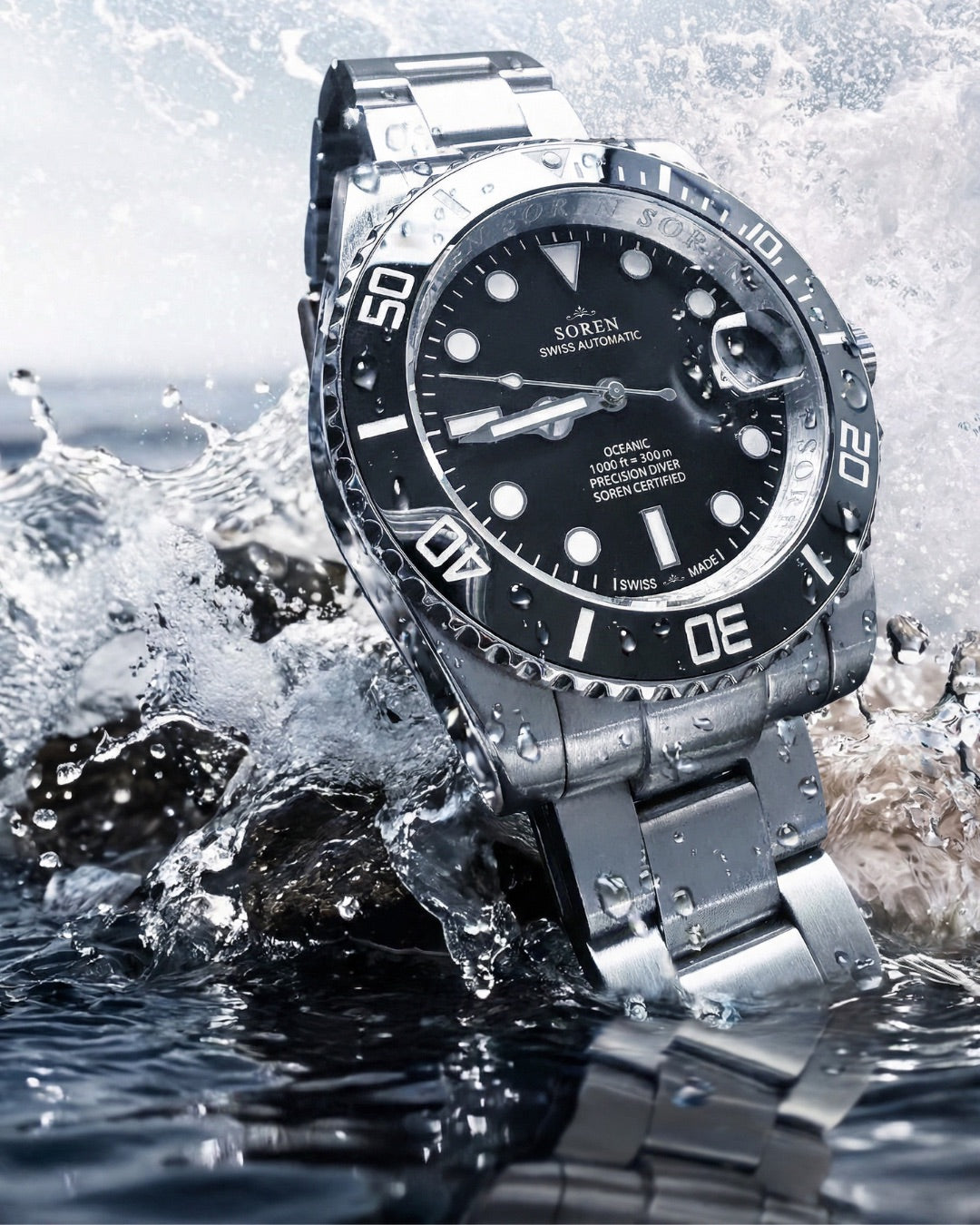
This is why a SOREN Oceanic with a Sellita SW200-1, sapphire crystal, ceramic bezel, 316L stainless steel, and 300 metres of water resistance costs €695, not because it compromises on Swiss Made quality, but because it does not pay a retail chain to sell it. For a detailed breakdown, see the guide to a Swiss Made watch for daily wear under €700.
How to Verify if a Watch Is Genuinely Swiss Made
If you want to confirm whether a watch truly meets the standard, here is what to check.
Look at the dial. The words "Swiss Made" should appear at the bottom of the dial, typically at the 6 o'clock position. This placement is legally regulated. If it says "Swiss Movement" or "Swiss Parts" instead, it does not meet the full standard.
Check the caseback. Most Swiss Made watches also carry the designation on the caseback, often alongside the serial number, movement reference, and water resistance rating.
Research the movement. If the brand specifies a Sellita, ETA, or other Swiss calibre, that is a strong indicator. If the movement is unspecified or listed as Japanese or Miyota, the watch is not Swiss Made regardless of marketing.
Look for transparency. A brand that is genuinely Swiss Made is typically open about it. It names the movement, explains the manufacturing process, and provides certification details. Brands that are vague about these details are often hiding something.
FAQ
What are the requirements for Swiss Made certification in 2026?
A watch must meet four criteria: the movement must be Swiss (assembled and inspected in Switzerland with at least 60% Swiss value), the watch must be cased up in Switzerland, the final inspection must take place in Switzerland, and at least 60% of the total manufacturing cost of the complete watch must be generated in Switzerland. These requirements have been in force since the 2017 Swissness reform.
What changed in the Swiss Made rules in 2017?
Two things. The value threshold rose from 50% to 60%, and the requirement was extended from just the movement to the complete watch. Before 2017, a brand could put a Swiss movement in a largely foreign-made watch and still claim Swiss Made. After 2017, at least 60% of the whole watch's manufacturing cost must be Swiss, closing that loophole.
Is Swiss Made a guarantee of quality?
It guarantees that the watch meets specific manufacturing and origin standards defined by Swiss law, which results in a high baseline of quality. However, it is a certification of origin and manufacturing, not a ranking of excellence. Two Swiss Made watches can differ in finishing and materials while both meeting the standard.
Can a non-Swiss brand make Swiss Made watches?
Yes. Any brand, regardless of where it is headquartered, can produce Swiss Made watches as long as the manufacturing process meets the legal requirements. Several Dutch, German, and American brands produce Swiss Made certified watches. What matters is where the watch is made, not where the company is based.
What is the difference between Swiss Made and Swiss Movement?
Swiss Made means the complete watch meets all four criteria. Swiss Movement means only the movement is Swiss, while the rest of the watch may be assembled elsewhere with foreign components. Swiss Made is the higher and more meaningful designation.
What is the difference between Swiss Made and COSC?
Swiss Made certifies origin and manufacturing. COSC certifies accuracy. A COSC chronometer has been individually tested and proven accurate to within -4/+6 seconds per day. They are separate standards; a watch can be Swiss Made without being COSC certified, and vice versa.
How is Swiss Made enforced?
The Federation of the Swiss Watch Industry (FH) actively monitors and enforces the designation worldwide, pursuing legal action against misuse in key markets including Hong Kong, China, and the United States. This enforcement is why the label retains its value; it is a legally defended designation, not just a marketing term.
Why are some Swiss Made watches so much cheaper than others?
The price difference is driven primarily by brand positioning, distribution costs, complications, and materials, not by the certification itself. A direct-to-consumer brand can offer the same movement and materials at a lower price because it does not pay retailer and distributor margins.
The Bottom Line
Swiss Made is not marketing. It is a legal certification, defined by Swiss federal law and enforced by the Federation of the Swiss Watch Industry, that guarantees where and how a watch is manufactured. The 2017 reforms made it stricter than ever: 60% of the complete watch's manufacturing value must be Swiss, the movement must be Swiss and assembled in Switzerland, and final inspection must take place on Swiss soil.
For the buyer, it is the most reliable shorthand for manufacturing quality in the watch industry. Not because Swiss is inherently better than everything else, but because the certification enforces a standard that most other countries do not regulate at all.
The question is not whether Swiss Made matters. It does. The question is whether you need to pay a premium for the retail chain that traditionally delivers it. Increasingly, thanks to the direct-to-consumer model, the answer is no.
Free EU shipping. 2-year warranty. 30-day returns. Swiss Made. sorenwatches.com


Leave a comment
This site is protected by hCaptcha and the hCaptcha Privacy Policy and Terms of Service apply.