
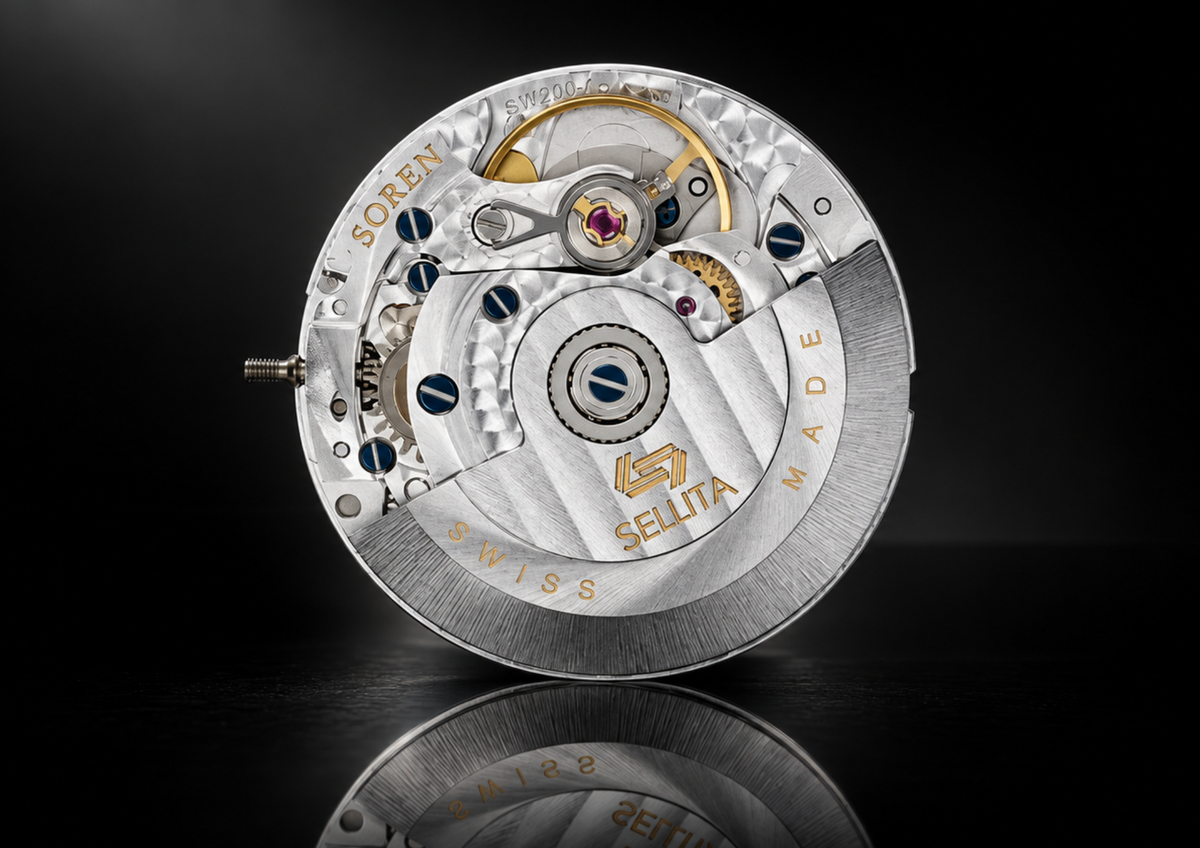
If you have spent any time researching Swiss automatic watches, you have seen these two movements named again and again: the Sellita SW200 and the ETA 2824-2. They appear in watches across the entire accessible Swiss segment, often at similar prices, and they look almost identical on a spec sheet. Which raises the obvious question: is there really any difference between them, and should it affect which watch you buy?
This guide answers that honestly. The two movements are more alike than almost any other pair in watchmaking, for a specific historical reason. But there are real differences in regulation, availability, and who can buy them, and this covers all of them, so you know exactly what is inside your watch and whether it matters.
The Short Answer
The Sellita SW200 and the ETA 2824-2 are functionally near-identical. The SW200 was deliberately engineered as a direct equivalent to the 2824-2, sharing nearly the same dimensions and interchangeable parts. Both are Swiss Made, both run at 28,800 bph, both offer around 38 to 42 hours of power reserve, and both are proven, reliable, and serviceable by any competent watchmaker.
The real differences are not in everyday performance. They are in who makes them, who can buy them, the number of jewels, a small regulation detail, and parts availability. For the person wearing the watch, the two are so similar that the movement should rarely be the deciding factor. But the differences are real, and worth understanding.
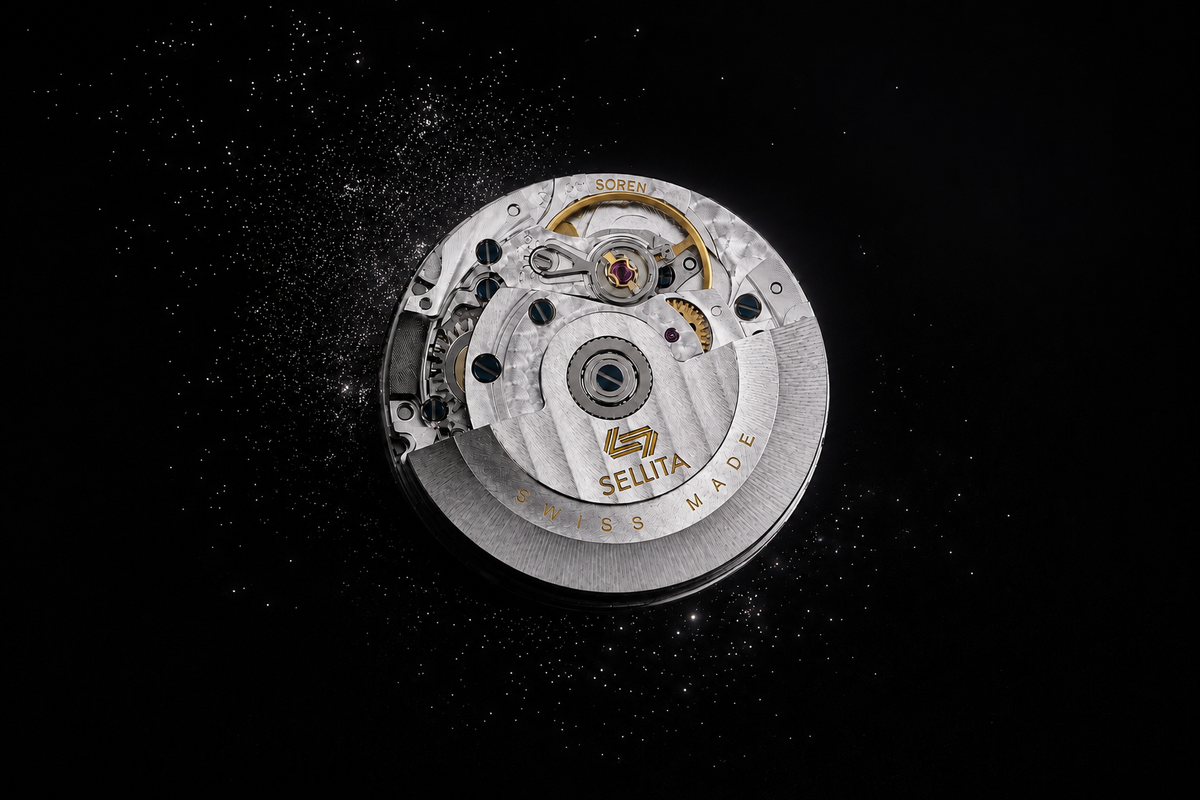
The Sellita SW200-1 is the movement in both current Soren models. Here is exactly how it compares to the ETA 2824-2.
Origins: Why the SW200 Exists
To understand why these two movements are so similar, you have to understand why the SW200 was created at all.
For most of the 20th century, ETA was the dominant supplier of movements to the entire Swiss watch industry. ETA, part of the Swatch Group, made calibres that powered watches from countless brands, both inside and outside the group. The ETA 2824, introduced in the early 1970s, became one of the most widely used automatic movements in the world: reliable, accurate, and serviceable.
Then, in the early 2000s, the Swatch Group announced it would gradually reduce and eventually restrict the sale of ETA movements to brands outside the group. This threatened every independent Swiss brand that relied on ETA. If ETA stopped selling to them, they would have no movements.
Sellita, which had spent years assembling ETA movements under contract and knew them intimately, stepped into the gap. When the patents on the ETA 2824 design expired, Sellita was legally able to produce its own version. The SW200 launched in 2008 as a direct, compatible equivalent to the 2824-2. This is why they are so alike: the SW200 was purpose-built to be a drop-in replacement, so that independent brands could keep making watches when ETA's supply was withdrawn.
The similarity is not a coincidence or a copy in the negative sense. It is the deliberate result of Sellita creating a legal, compatible alternative to keep the independent Swiss industry alive. Today Sellita produces hundreds of thousands of movements a year and is the backbone of independent Swiss watchmaking.
Technical Specs Side by Side
On the core specifications, the two movements are nearly identical.
| Specification | Sellita SW200-1 | ETA 2824-2 |
|---|---|---|
| Beat rate | 28,800 bph (4 Hz) | 28,800 bph (4 Hz) |
| Power reserve | 38 to 42 hours | 38 to 42 hours |
| Jewels | 26 | 25 |
| Diameter | 25.6 mm | 25.6 mm |
| Height | 4.6 mm | 4.6 mm |
| Winding | Automatic + hand | Automatic + hand |
| Hacking seconds | Yes | Yes |
| Swiss Made | Yes | Yes |
The dimensions are the same, which is what makes them interchangeable in a watch case. The beat rate, power reserve, winding, and hacking are identical. The one visible difference on paper is the jewel count: the SW200 has 26 jewels, the ETA 2824-2 has 25. Sellita added one additional jewel, on the barrel, which is a minor construction difference rather than a meaningful performance one.
For everyday accuracy and reliability, these two movements perform to the same standard. The SW200 accuracy guide covers how the grades work, and the same grade of each movement performs to the same tolerance.
The Regulator Difference
Here is the one genuine technical difference that watchmakers sometimes point to.
The ETA 2824-2 traditionally uses an ETACHRON regulation system, ETA's own refined mechanism for adjusting the balance and hairspring. The Sellita SW200 uses its own equivalent regulation system. In earlier production, some watchmakers regarded ETA's ETACHRON system as marginally more refined and easier to fine-tune to a very high degree of precision.
In practice, this difference has narrowed over the years as Sellita has refined its own system, and for the vast majority of watches it makes no perceptible difference. Both movements can be regulated to run accurately, both can be adjusted by a competent watchmaker, and both hold their rate well. The regulation difference is the kind of thing that matters in a discussion between watchmakers, not something the wearer will ever notice on the wrist.
It is worth being honest that this distinction exists, because you may see it mentioned. But it is a detail of degree, not a difference that makes one movement good and the other not. Both are excellent, regulatable movements.
Service and Parts Availability
This is a more practical difference, and it has shifted over time.
For decades, ETA had the advantage here. As the older and more dominant movement, the 2824-2 had unmatched parts availability and every watchmaker in the world knew it intimately. If you needed a part or a service, the 2824-2 was the most familiar movement on any watchmaker's bench.
The SW200 has closed this gap almost entirely. Because it is dimensionally compatible with the 2824-2, many parts are interchangeable between the two, and because Sellita now produces so many movements, SW200 parts are widely available. Any competent watchmaker can service an SW200, and many can use 2824-2 parts where needed. The SW200 service guide covers what servicing involves and what it costs, which is typically €80 to €150 every three to five years for either movement.
There is a subtle irony worth noting. Because ETA restricted its movement sales to protect the Swatch Group, the SW200 is now often more available to independent watchmakers and brands than the 2824-2 itself. For servicing outside the Swatch Group network, the SW200's open availability can actually be an advantage.
Which Brands Use Which
The divide is largely structural, and it tells you a lot about the industry.
ETA 2824-2 is now found mainly in Swatch Group brands, because ETA restricted its sales to companies within the group. So the 2824-2 and its derivatives appear in Tissot, Hamilton, Certina, Mido, and other Swatch Group names, as well as some older watches and a few brands with grandfathered supply arrangements.
Sellita SW200 is found across independent Swiss watchmaking. Because it is available to brands outside the Swatch Group, it powers a vast range of independent watches, from accessible brands to some surprisingly high-end names. It has become the default movement of the independent Swiss watch world, including Soren.
So in practice, when you compare an independent brand's watch to a Swatch Group watch at a similar price, you are often comparing an SW200 to an ETA 2824-2 or its Powermatic derivative. That broader brand comparison is covered in the independent brand versus Tissot guide.
Does It Matter Which One Is in Your Watch?
Honestly, for almost everyone, no.
The two movements are so similar in everyday performance that the choice between them should rarely drive your watch purchase. Both are Swiss Made, both run at the same beat rate, both offer the same power reserve, both keep time to the same standard within a given grade, and both will last for decades with servicing. The differences, one jewel, a regulation nuance, and supply structure, are real but do not affect how the watch performs on your wrist.
What should drive your decision is the watch as a whole: the design, the case and bracelet material, the crystal, the water resistance, the price, and who stands behind it. The movement, whether SW200 or 2824-2, is a reliable Swiss engine either way. A watch with a well-specified case, solid 316L steel, and honest pricing is a good buy regardless of which of these two near-identical movements sits inside.
If anything, the SW200's open availability gives it a slight practical edge for long-term servicing outside the Swatch Group, but that is a minor point. Both are among the best-proven automatic movements in the world.
FAQ
Is the Sellita SW200 as good as the ETA 2824-2?
Yes. The SW200 was engineered as a direct equivalent to the 2824-2, and in everyday performance the two are near-identical: same beat rate, same power reserve, same accuracy within a given grade, same reliability. The SW200 even has one more jewel. Any perceived difference is marginal and does not affect how the watch performs. Both are excellent, proven Swiss movements.
Can a watchmaker service both the same way?
Essentially yes. The two movements are dimensionally compatible, share many interchangeable parts, and are serviced using the same fundamental process. Any competent watchmaker can service either one, and parts for both are widely available. In fact, because ETA restricted its supply, SW200 parts are often more accessible to independent watchmakers than 2824-2 parts. Service cost and intervals are the same for both, typically €80 to €150 every three to five years.
Which movement is more accurate?
Neither is inherently more accurate. Accuracy depends on the grade the movement is regulated to, not on whether it is a Sellita or an ETA. A Special grade SW200 and an equivalent-grade 2824-2 perform to the same tolerance. Both can be regulated by a watchmaker to run very accurately. The movement brand is not the factor that determines accuracy; the grade and regulation are.
Why do people say ETA is better?
Mostly for historical reasons. The 2824-2 is older and was the industry standard for decades, so it built a strong reputation, and some watchmakers historically preferred ETA's regulation system. But the SW200 has matched it in reliability and availability, and the performance gap, if it ever meaningfully existed at this level, has effectively closed. The preference for ETA today is often reputation rather than a measurable performance difference.
Is one movement more expensive than the other?
They are broadly similar in cost, and both appear in watches across a wide price range. The movement is not usually what drives the price difference between two watches; that is more often the brand, the distribution model, and the other components. The same movement can sit in a €600 watch and an €1,800 one.
Which movement does Soren use?
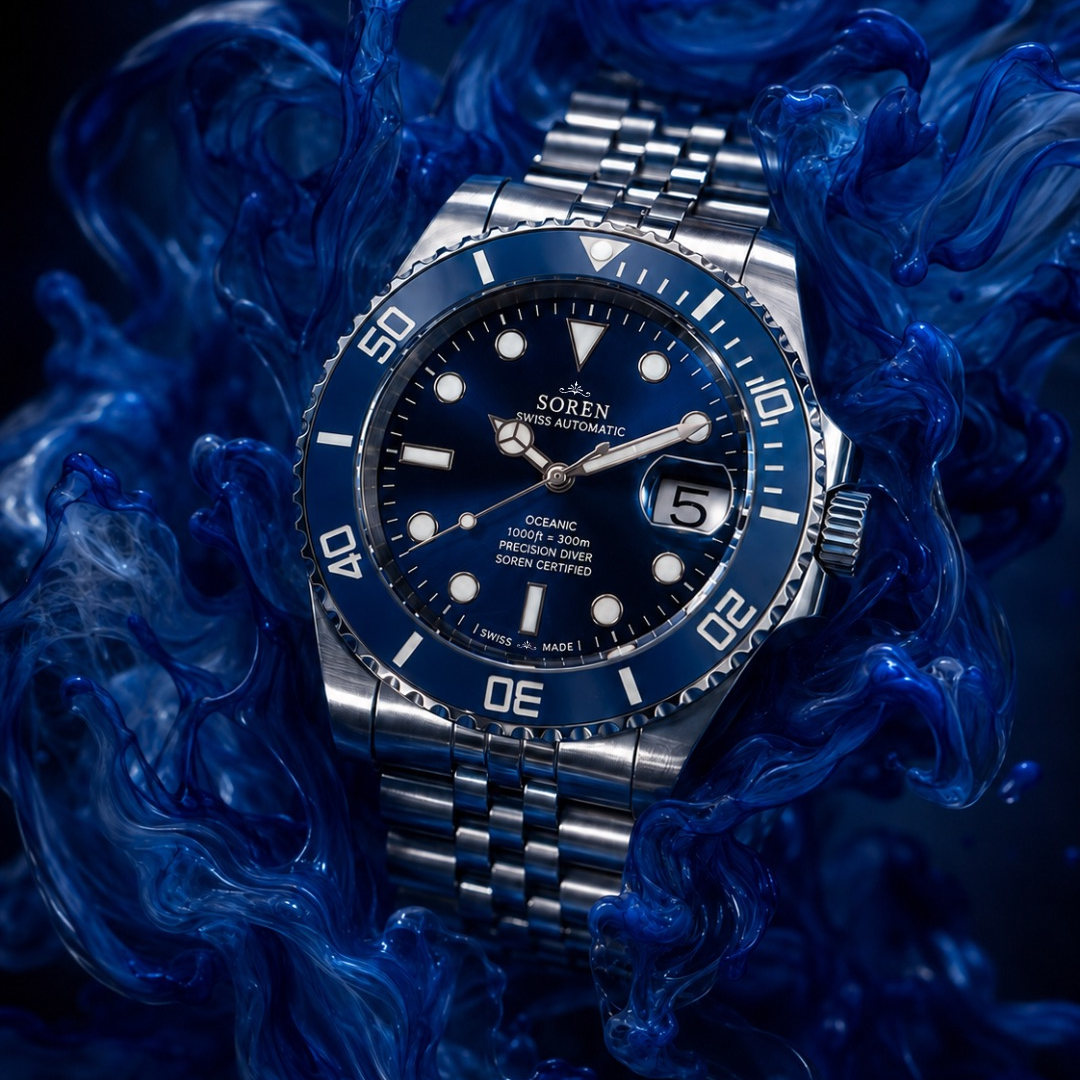
Both current Soren models, the Momentis and the Oceanic, use the Sellita SW200-1. It is a Swiss Made automatic running at 28,800 bph with 26 jewels, functionally equivalent to the ETA 2824-2, and serviceable by any competent watchmaker worldwide.
The Bottom Line
The Sellita SW200 and the ETA 2824-2 are the closest thing to twins in Swiss watchmaking, and that is by design. The SW200 was purpose-built as a compatible equivalent so that independent brands could keep making watches when ETA withdrew its supply. The result is two movements that perform to the same standard in every way that matters to the person wearing the watch.
The real differences, one extra jewel, a regulation nuance, and who is allowed to buy each, are genuine but do not change how the watch performs. Both are Swiss Made, both are reliable, both are serviceable, and both will last for decades.
So when you are choosing a watch, do not agonise over which of these two movements is inside. Choose the watch: the design, the materials, the price, and the brand behind it. Whether it runs on an SW200 or a 2824-2, you are getting a proven Swiss engine either way.
Free EU shipping. 2-year warranty. 30-day returns. Swiss Made. sorenwatches.com


Leave a comment
This site is protected by hCaptcha and the hCaptcha Privacy Policy and Terms of Service apply.