
Swiss Made horloges kosten meer dan hun Japanse of generieke tegenhangers. Dat staat buiten kijf. Maar de redenen die de meeste mensen aannemen – dat Zwitserse horloges simpelweg te duur zijn of dat je alleen voor de merknaam betaalt – zijn grotendeels onjuist. De waarheid is interessanter, en het begrijpen ervan verandert de manier waarop je beoordeelt of een horloge eerlijk geprijsd is.
Dit is een eerlijke analyse van waar de prijs van een Swiss Made horloge werkelijk uit bestaat: wat de certificering vereist, wat Zwitserse arbeid kost, wat een uurwerk daadwerkelijk kost om te produceren en de grootste opslag die helemaal niets met het horloge zelf te maken heeft.
Het korte antwoord
Een Swiss Made horloge kost meer om te produceren dan een Japans of generiek automatisch horloge om drie echte redenen: Zwitserse arbeid is duur, de Swiss Made-certificering vereist wettelijk dat het grootste deel van de waarde in een van de duurste landen ter wereld wordt gecreëerd, en Zwitserse uurwerken worden gemaakt volgens toleranties waarvan het aanhouden geld kost.
Maar hier komt het belangrijkste deel. Het verschil tussen een Swiss Made horloge van € 625 en een van € 1.500 zit meestal niet in de productiekosten. Het is de verkoopketen. Twee horloges kunnen vrijwel hetzelfde kosten om te produceren en voor totaal verschillende prijzen worden verkocht; het verschil is de opslag, niet de productie. Dat is het echte verhaal van wat Swiss Made kost.
Wat de Swiss Made-certificering werkelijk vereist
Het Swiss Made-label is geen marketingkeuze die een merk maakt. Het is een wettelijke norm die kosten in het horloge dwingt.
Om het label te mogen dragen, moet ten minste 60% van de totale productiekosten van het horloge in Zwitserland worden gegenereerd, moet het uurwerk Zwitsers zijn en in Zwitserland zijn geassembleerd, en moet de eindcontrole op Zwitserse bodem plaatsvinden. Deze regels zijn in 2017 aangescherpt, waardoor de drempel hoger is gelegd en deze niet alleen meer voor het uurwerk geldt, maar voor het gehele horloge.
Dit is het cruciale punt: de certificering vereist wettelijk dat het merendeel van de waarde van het horloge in Zwitserland wordt gecreëerd. En Zwitserland is een van de duurste landen ter wereld om wat dan ook te produceren. Dus de certificering zelf bouwt, door het ontwerp, kosten in het horloge in. Je kunt geen echt Swiss Made horloge goedkoop maken in een lagelonenland, omdat het horloge dan niet aan de eisen voor het label zou voldoen. De standaard garandeert een ondergrens voor de kosten.
Dat is de eerste eerlijke reden waarom Swiss Made meer kost. De certificering dwingt het af.
De kosten van Zwitserse arbeid
Zwitserland heeft een van de hoogste loonkosten ter wereld. Geschoolde horlogemakers – de mensen die uurwerken assembleren, horloges in de kast plaatsen en de eindcontrole uitvoeren – zijn duur, en dat moet ook wel, omdat de kosten van levensonderhoud en de loonstandaarden in Zwitserland tot de hoogste ter wereld behoren.
Een horloge dat in Zwitserland is geassembleerd en gecontroleerd, draagt die arbeidskosten op een manier die een horloge dat in een lagelonenland is geassembleerd, niet heeft. Dit is geen inefficiëntie. Het is de prijs van de expertise en de locatie die het Swiss Made-label certificeert. Wanneer je wettelijk vereist dat het horloge in Zwitserland wordt geassembleerd en gecontroleerd, vereist je dat het wordt aangeraakt door een van de duurste geschoolde arbeidskrachten ter wereld.
Dit is de tweede eerlijke reden. Zwitserse handen zijn kostbare handen, en de certificering eist ze.
Uurwerkkosten: wat een Sellita SW200 werkelijk kost om te produceren
Hier worden mythes doorgeprikt. Het uurwerk is het hart van het horloge, en mensen gaan ervan uit dat in het uurwerk het grootste deel van de kosten zit. Het is een aanzienlijke kostenpost, maar niet op de manier die de meeste mensen aannemen.
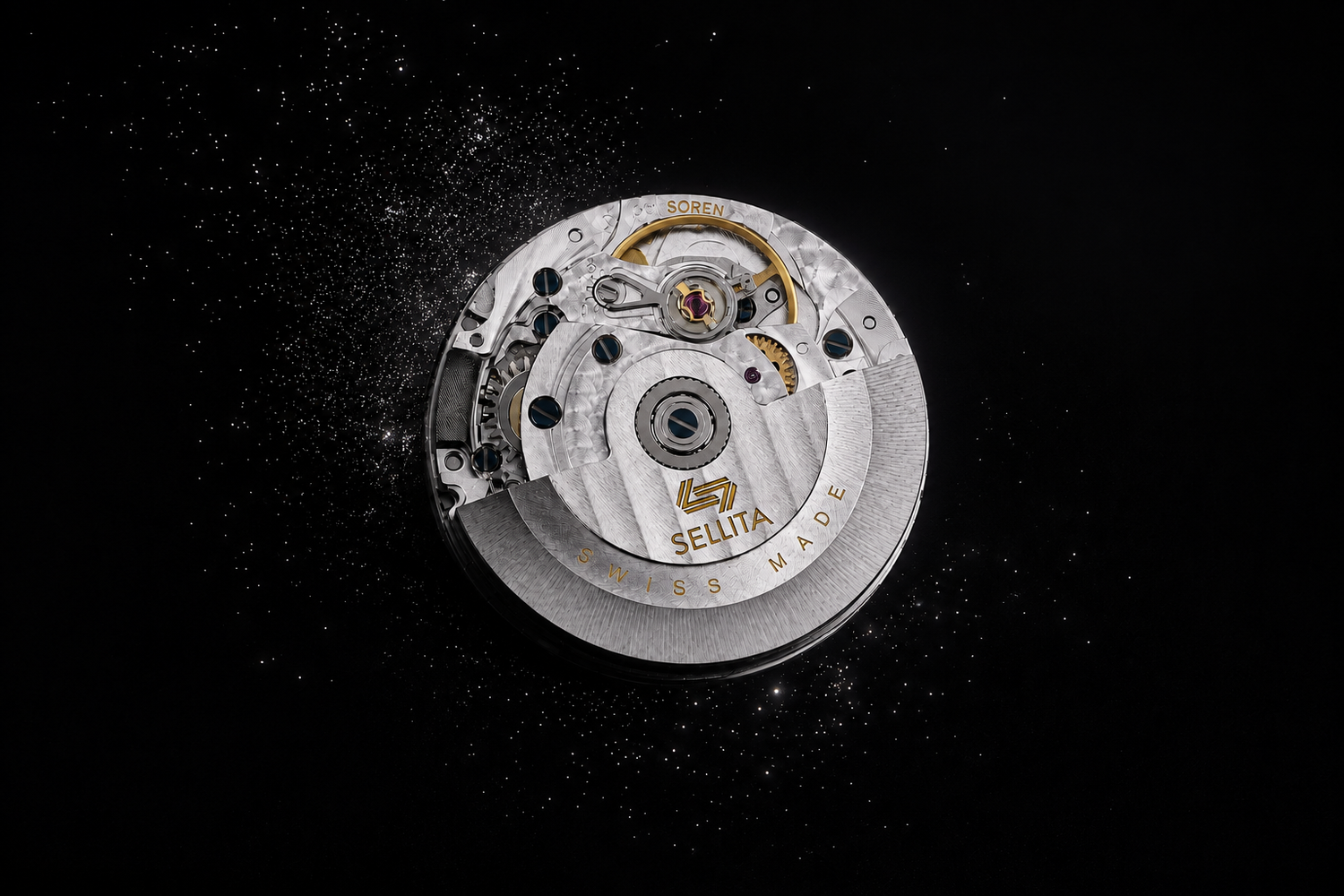
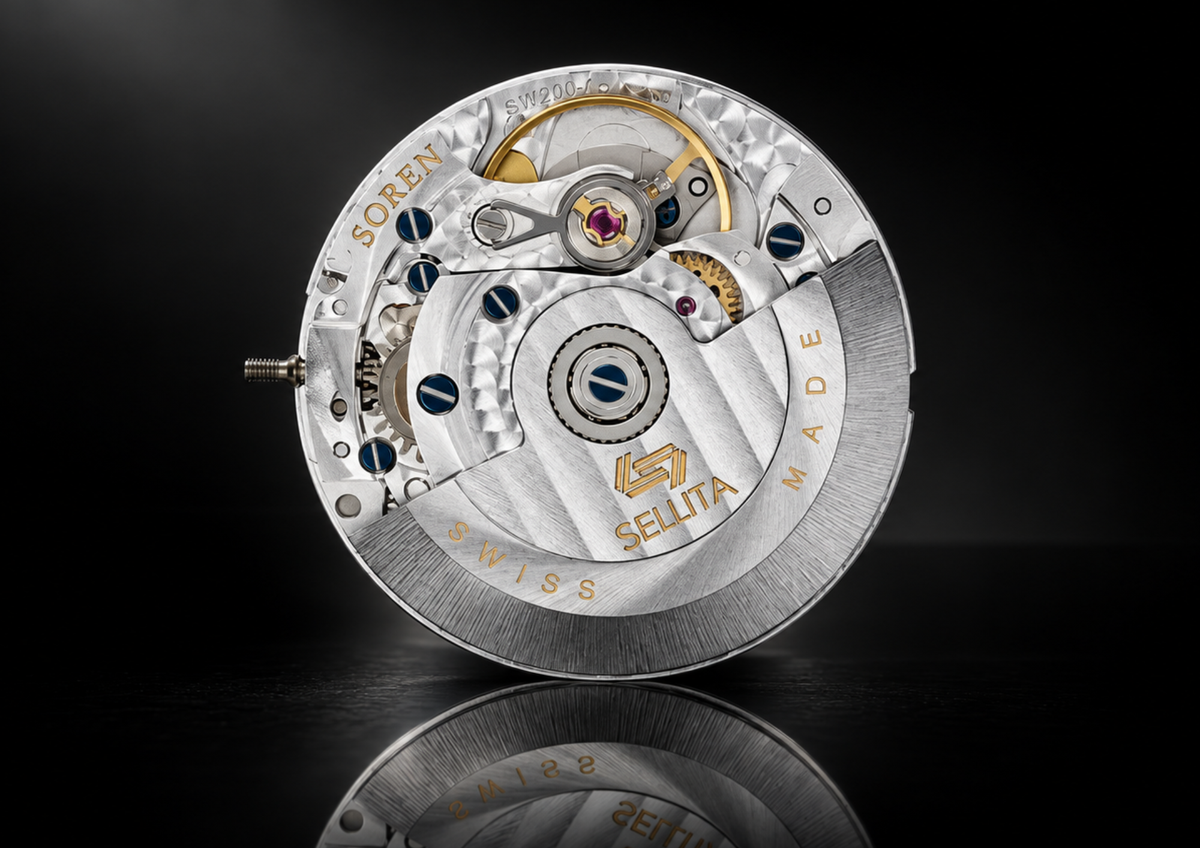
De Sellita SW200-1, het uurwerk in de meeste toegankelijke Swiss Made automatische horloges, is een precisie-instrument met meer dan 25 afzonderlijke robijnen lagers, een balans die 28.800 keer per uur oscilleert en toleranties die in fracties van een millimeter worden gemeten. Het produceren hiervan volgens Zwitserse normen kost echt geld, en het is een reëel, substantieel onderdeel van de kosten van het horloge.
Maar hetzelfde uurwerk komt voor in horloges van ongeveer € 300 tot ruim boven de € 2.000. Het uurwerk verandert niet. Een Sellita SW200-1 kost Sellita ongeveer hetzelfde om te maken, ongeacht welk merk het koopt. Dus wanneer je een horloge met dit uurwerk ziet voor € 600 en een ander voor € 1.800, dan is het uurwerk niet de variabele factor. Het kost in beide gevallen ongeveer evenveel.
Dit vertelt je iets belangrijks. Als het uurwerk hetzelfde kost in een horloge van € 600 en een horloge van € 1.800, dan is het verschil van € 1.200 niet het uurwerk. Het is alles wat rondom het uurwerk is gebouwd, en meestal is het alles wat rondom het horloge is gebouwd nadat het de fabriek heeft verlaten.
Dat is de derde reden, en die leidt direct naar de grootste.
Waarom direct-to-consumer de grootste opslag van allemaal verwijdert
Dit is de opslag die niemand op een specificatieblad zet: de verkoopketen.
Een traditioneel Zwitsers horloge bereikt je via een keten. Het merk verkoopt aan een distributeur, die een marge toevoegt, vaak 30 tot 50%. De distributeur verkoopt aan een winkelier of juwelier, die daar nog eens een marge van 50 tot 100% bovenop doet. Daarbovenop komen de marketing- en sponsoruitgaven van het merk, die worden gefinancierd door elk verkocht horloge. Tegen de tijd dat het horloge om je pols zit, kan de keten voor meer dan de helft van de prijs verantwoordelijk zijn.
Niets van die keten is het horloge zelf. Het is huur voor een boetiek in de winkelstraat, de logistiek van de distributeur, de marge van de juwelier en het advertentiebudget. Het uurwerk, de kast, het glas, het staal en de Zwitserse arbeid zijn hetzelfde, of het horloge nu voor € 625 direct wordt verkocht of voor € 1.500 via een juwelier. Het verschil is de keten.
Een direct-to-consumer merk verwijdert deze keten. Het horloge gaat van de Zwitserse fabrikant naar het magazijn van het merk en vervolgens naar jouw deur. Geen distributeursmarge, geen juweliersmarge, geen boetiek-huur, geen sponsorbudget. De productiekosten zijn hetzelfde als bij een vergelijkbaar winkelhorloge. De prijs is lager omdat de keten weg is. Dit is het mechanisme dat volledig wordt uitgelegd in de gids over onafhankelijke merken versus Tissot.
De grootste drijfveer achter wat een Swiss Made horloge voor jou kost, is dus helemaal niet de productie. Het is de distributie. En dat is de enige kostenpost die kan worden verwijderd zonder aan het horloge zelf te raken.
Waar je werkelijk voor betaalt bij € 625 tot € 695
Leg het bij elkaar en het beeld is duidelijk.
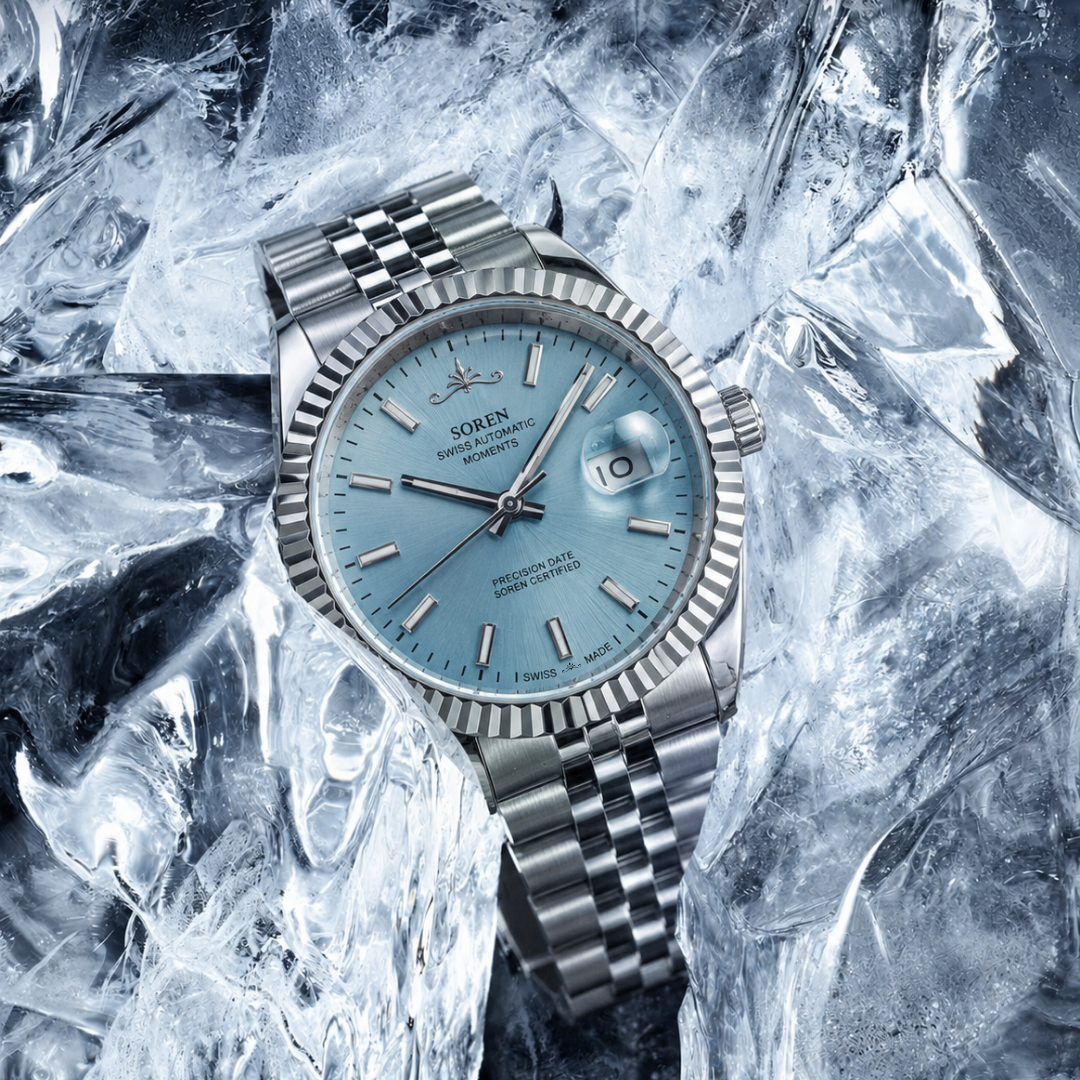
Wanneer je een SOREN Momentis koopt voor € 625 of een Oceanic voor € 695, betaal je voor de werkelijke productiekosten van een Swiss Made horloge: de door de certificering verplichte Zwitserse productie, de dure Zwitserse arbeid voor assemblage en inspectie, het Sellita SW200-1 uurwerk, het saffierglas en het solide 316L-staal. Dat zijn reële kosten, en het zijn dezelfde kosten die in horloges zitten die veel duurder geprijsd zijn.
Waar je niet voor betaalt, is de verkoopketen. Er is geen distributeursmarge, geen juweliersmarge, geen boetiek-huur en geen sponsorbudget in de prijs verwerkt. Dat is de enige reden waarom de prijs is wat hij is.
Het eerlijke antwoord op "waarom zijn Zwitserse horloges duur" is dus dat echte Zwitserse productie oprecht duur is en de certificering dat afdwingt. Maar het eerlijke antwoord op "waarom kosten sommige Zwitserse horloges twee keer zoveel als andere met hetzelfde uurwerk en materiaal" is anders: dat is de verkoopketen, en die is optioneel.
Veelgestelde vragen
Waarom zijn Swiss Made horloges duurder dan Japanse?
Omdat de Swiss Made-certificering wettelijk vereist dat het merendeel van de waarde van het horloge wordt gecreëerd in Zwitserland, een van de duurste landen ter wereld, waarbij gebruik wordt gemaakt van dure geschoolde Zwitserse arbeid. Japanse automatische horloges worden gemaakt in goedkopere productieomgevingen, waardoor ze lager geprijsd kunnen zijn. Het verschil zit in de werkelijke productiekosten bepaald door waar en hoe het horloge wettelijk moet worden gemaakt, niet simpelweg in een merkpremie. Of die premie het waard is, hangt af van of je waarde hecht aan het Zwitserse stamboom van het uurwerk, de certificering en de onderhoudbaarheid.
Is Swiss Made de meerprijs waard?
Voor veel kopers wel, mits je vermijdt dat je daar bovenop nog de winkelopslag betaalt. De Swiss Made-premie ten opzichte van een Japans horloge weerspiegelt de werkelijke productiekosten en koopt certificering, een Zwitsers uurwerk met decennia aan onderhoudsmogelijkheden en een gedefinieerde productiestandaard. Wat vaak niet de moeite waard is, is de extra winkelopslag die de prijs van een traditioneel Zwitsers horloge verdubbelt zonder iets aan het horloge zelf toe te voegen. Door een Swiss Made horloge direct te kopen, geniet je van de echte waarde terwijl je de vermijdbare opslag ontloopt.
Hoeveel kost een Sellita SW200 uurwerk?
Sellita publiceert geen prijzen per eenheid, en het exacte cijfer hangt af van de kwaliteit en het volume, maar het belangrijkste punt is dat het uurwerk ongeveer hetzelfde kost, ongeacht welk merk het koopt. Dezelfde Sellita SW200-1 verschijnt in horloges van ongeveer € 300 tot ruim boven de € 2.000. Aangezien de kosten voor het uurwerk voor al deze horloges vergelijkbaar zijn, verklaart dit niet het prijsverschil tussen een horloge van € 625 en een van € 1.800. Dat verschil is de verkoopketen en de positionering van het merk, niet het uurwerk.
Gebruikt een duurder Zwitsers horloge een beter uurwerk?
Niet per se. Veel horloges met zeer verschillende prijspunten gebruiken exact hetzelfde uurwerk, zoals de Sellita SW200-1 of het ETA-equivalent ervan. Een duurder horloge kan een verfijndere afwerking, een meer gevestigde merknaam of een gecompliceerder uurwerk bieden, maar in het toegankelijke segment draaien twee horloges met hetzelfde uurwerk op dezelfde motor, ongeacht de prijs. De SW200-uurwerkgids behandelt dit in detail.
Welk percentage van de prijs van een horloge is het horloge zelf?
Dat varieert enorm per bedrijfsmodel. Bij een traditioneel winkelhorloge kunnen de keten, distributeursmarge, winkelmarge, boetiekkosten en marketing meer dan de helft van de verkoopprijs uitmaken. In een direct-to-consumer model weerspiegelt een veel groter deel van de prijs het horloge zelf, omdat de keten is verwijderd. Dit is de reden waarom twee horloges met vergelijkbare productiekosten voor totaal verschillende prijzen kunnen worden verkocht.
Zijn goedkopere Swiss Made horloges van mindere kwaliteit?
Niet als ze voldoen aan de echte standaarden. Een goedkoper Swiss Made horloge dat een bekend Zwitsers uurwerk, saffierglas en solide staal gebruikt, is niet van mindere kwaliteit; het is vaak dezelfde kwaliteit die via een efficiënter model wordt verkocht. De prijs op dit niveau wordt meer bepaald door distributie en merk dan door productiekwaliteit. De zaken om te controleren zijn het uurwerk, het glas en of het staal solide of gecoat is, niet alleen de prijs.
De kern van de zaak
Swiss Made horloges kosten meer om te produceren dan Japanse of generieke alternatieven, en wel om echte redenen: de certificering dwingt wettelijk dat het merendeel van de waarde in het dure Zwitserland wordt gecreëerd, Zwitserse geschoolde arbeid is duur en Zwitserse uurwerken worden gemaakt volgens reële toleranties. Die productiepremie is eerlijk, en dat is wat het Swiss Made-label garandeert.
Maar de veel grotere drijfveer achter wat je werkelijk betaalt is de verkoopketen, en die is optioneel. Hetzelfde uurwerk, dezelfde materialen en dezelfde Zwitserse arbeid zitten in een direct verkocht horloge van € 625 en een winkelhorloge van € 1.500. Het verschil is de distributeur, de juwelier, de boetiek en het marketingbudget, en niets daarvan is het horloge zelf.
Dit begrijpen is het verschil tussen te veel betalen en een goede aankoop doen. Betaal voor de Zwitserse productie, die echt is. Betaal niet voor de keten, die vermijdbaar is.
Gratis verzending in de EU. 2 jaar garantie. 30 dagen recht op retour. Swiss Made. sorenwatches.com


Laat een reactie achter
Deze site wordt beschermd door hCaptcha en het privacybeleid en de servicevoorwaarden van hCaptcha zijn van toepassing.